
This content contains affiliate links, which helps hangrywoman.com to provide free recipes and resources. Thank you for your support of my blog and non-profit organization, Glucose Guide.
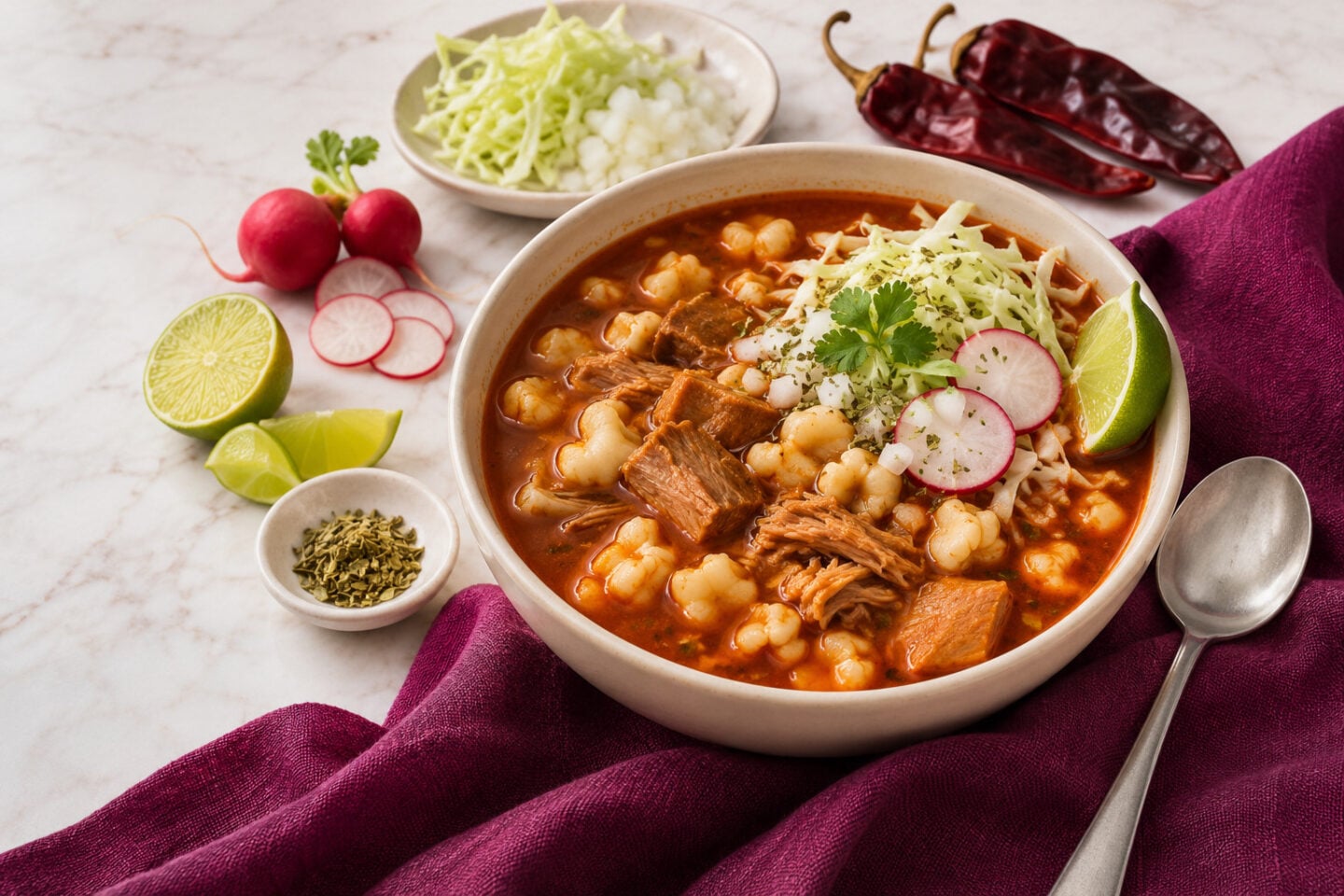
Pozole is a bowl, not one fixed number.
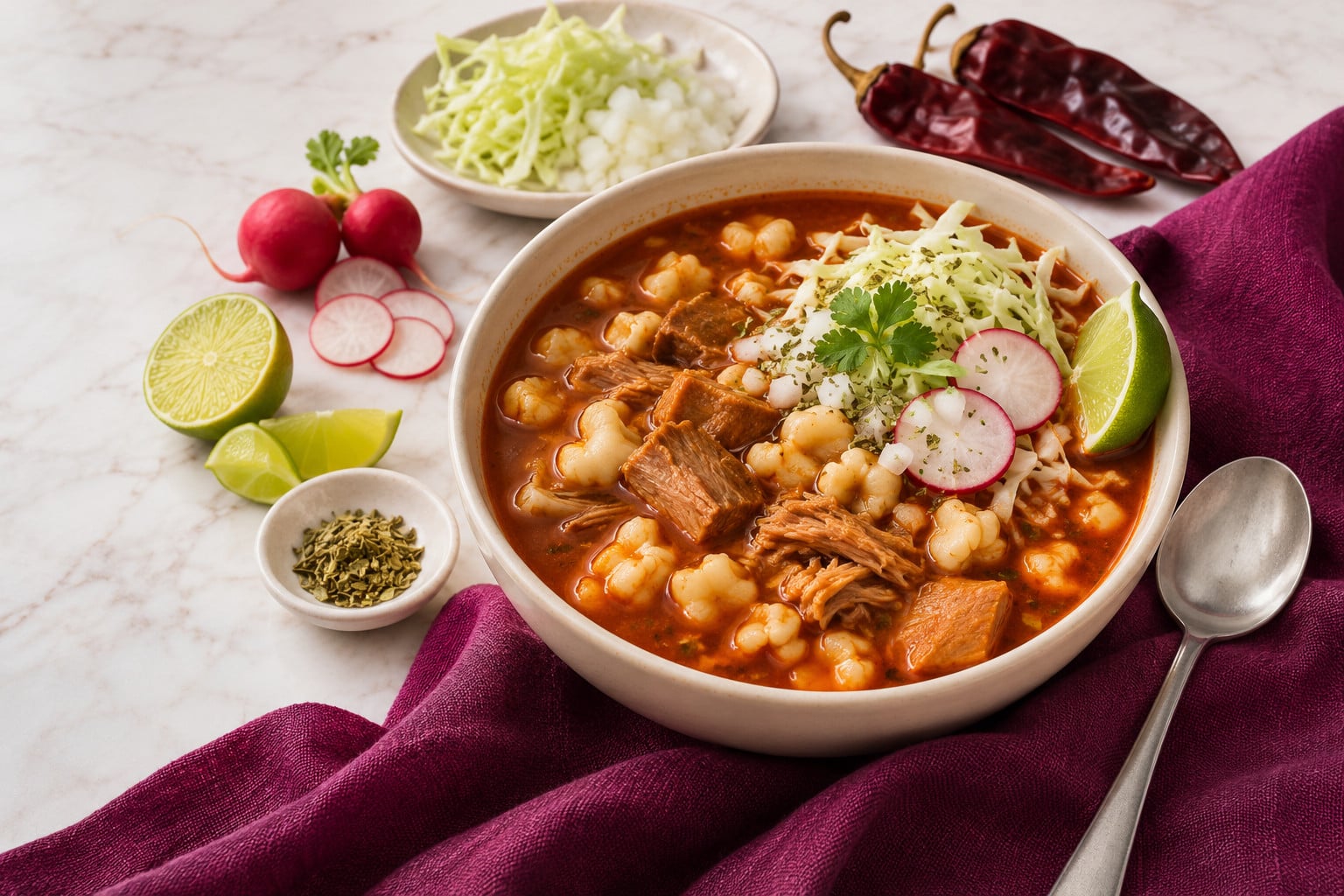
The honest answer to “How many carbs are in pozole?” is: it depends mostly on how much hominy lands in your bowl, which hominy you used, how large the bowl is and whether tostadas or other carb-containing sides join the party.
That is not a dodge. Two canned white-hominy labels I checked list different amounts for the same labeled serving size.
Goya White Hominy lists 13 grams of total carbohydrate per ½ cup, while Teasdale Mexican Style Hominy lists 18 grams per ½ cup.12
Your can may be different again.
The quick answer
Using those two real label examples:
- ½ cup hominy: about 13–18 grams of total carbohydrate
- 1 cup hominy: about 26–36 grams
- 1½ cups hominy: about 39–54 grams
Those numbers cover the hominy, not the entire meal. Broth, chile sauce, onion, garlic and garnishes add some carbohydrate, and tostadas can move the total quickly.
A Calidad tostada label, for example, lists 17 grams of total carbohydrate for three tostadas—about 5.7 grams each by simple division.3
These are examples for learning the math, not carb targets and not a universal nutrition fact for all pozole.
Why the count changes from bowl to bowl
1. Hominy brand and serving size
Hominy is corn that has been treated through nixtamalization. It is also usually the main carbohydrate source in pozole. “One ladle” does not tell you how much hominy is in it: one cook may scoop mostly broth and meat, while another catches a generous scoop of kernels.
If you make pozole at home, read the total carbohydrate line and the servings per container on your can.
If the label says 18 grams per ½ cup and the can contains seven servings, the whole can contributes about 126 grams of total carbohydrate before you divide the pot.
2. The broth and chile base
Plain broth and meat contribute little or no carbohydrate, but the chile base is not automatically zero. Dried chiles, onion, garlic, tomatoes and tomatillos all contribute varying amounts. Bottled enchilada sauce, seasoning packets and sweetened sauces can add more.
Red, green and white pozole are styles, not reliable carb-count categories. The ingredient list and the amount in the pot matter more than the color.
3. Bowl size
A restaurant “cup,” cereal bowl and wide handmade bowl can hold very different amounts. If precision matters today, estimate the hominy itself rather than assuming every bowl is two cups.
At home, ladle one normal serving into your bowl, then use a slotted spoon to see roughly how much hominy is there. You only need to do this once or twice to get a useful visual reference for your own bowls.
4. Tostadas and other sides
Tostadas, tortilla chips, bread and sweetened drinks count separately. They are not a reason to skip pozole. They are simply easier to estimate when you keep their labels or portions visible.
Three real-world pozole bowls
The ranges below use the two hominy labels above and the Calidad tostada example. They do not include every carbohydrate in the broth, sauce or toppings, so treat them as starting estimates.
Bowl 1: Brothy with lighter hominy
- ½ cup hominy: 13–18 grams
- Broth and meat
- Cabbage, radish, onion, chile and lime
Starting estimate: 13–18 grams from hominy, plus the smaller contributions from the broth base and garnishes.
This build still gets texture from crunchy cabbage and radish. “Lighter hominy” describes the bowl, not a judgment about what anyone should eat.
Bowl 2: Classic hominy-forward bowl
- 1 cup hominy: 26–36 grams
- Broth and meat
- Cabbage, radish, onion, oregano, chile and lime
Starting estimate: 26–36 grams from hominy, plus the broth base and garnishes.
If you are eating out, this is a reasonable range to compare with the bowl in front of you. More kernels than broth? Use the higher-volume build below.
Bowl 3: Extra hominy plus two tostadas
- 1½ cups hominy: 39–54 grams
- Two example tostadas: about 11 grams
- Broth, meat and toppings
Starting estimate: roughly 50–65 grams from the hominy and two tostadas, before the remaining ingredients.
The point is not that this bowl is “too much.” The point is that it is a different bowl, and the difference is visible.
How to count the macros in homemade pot of pozole
Home cooks have an advantage: the cans and packages are right there.
- Total the hominy. Multiply the total carbohydrate per serving by the number of servings used from every can or package.
- Add other carb-containing ingredients. Include chile sauce, tomatoes or tomatillos, onion, garlic, beans if used, and any added sugar.
- Choose a dividing method. If the pot makes eight similar servings, divide by eight. If people take very different amounts of hominy, measure the finished hominy volume and estimate each bowl from that.
- Count sides separately. Use the tostada or chip label and the number actually eaten.
- Log down what happened. A carb estimate becomes more useful when it sits beside the portion, timing and your own glucose response.
The CDC describes carb counting as one meal-planning option and notes that combination foods such as soups and casseroles often require estimation.4
One way to count carbs accurately, is to use our carb counting app, Glucose Guide. You can use the app as your companion, or join our free diabetes community app.
Total carbs or net carbs for pozole?
For label math, start with total carbohydrate unless your clinician has specifically taught you another method. “Net carbs” is a marketing calculation and is not defined consistently across products. It often subtracts fiber and sometimes sugar alcohols, but brands may calculate it differently.
Using total carbohydrate also keeps the math consistent across hominy, tostadas and sauces.
You can still note fiber and watch how your own body responds; just avoid mixing total-carb numbers from one ingredient with net-carb numbers from another.
Toppings do more than decorate the bowl
Cabbage, radish, onion, lime, oregano and chile are not nutritionally invisible, but their carbohydrate contribution is usually smaller than a generous scoop of hominy or several tostadas.
They bring crunch, heat, brightness and aroma—the parts that make the bowl taste like pozole instead of a spreadsheet.
Keep the toppings. Count what is meaningful, use the label you actually have, and resist the urge to turn a traditional bowl into punishment food.
If you are ordering pozole at a restaurant
- Ask whether the bowl is available in a cup and bowl size.
- Notice the hominy-to-broth ratio when it arrives.
- Count tostadas one at a time instead of estimating the whole basket later.
- If you want more information, ask whether nutrition details are available—but do not expect an independent restaurant to have laboratory numbers.
- Use your glucose data as feedback, not a grade.
For another crunchy Mexican-inspired option, see these Low Carb Beef Tenderloin Taquitos. If soup is the assignment, Chicken Enchilada Soup offers a different bowl with its own clearly listed ingredients.
Make your estimate useful
The best estimate is the one tied to the bowl you actually ate. If you want to keep the food, portion notes and glucose response together, Glucose Guide includes built-in journaling and personalized feedback so the data can become a pattern—not just another number to remember.