
In 2012, I unofficially started The Hangry Woman when I was a new college grad and learning to use my kitchen. In 2016, when I was misdiagnosed with Type 2 Diabetes, I dedicated this space to searching for, and finding answers to my health.
I fell in love with developing great recipes for people living with chronic conditions – especially people living with diabetes like me.
It allowed me some space to do this on my own for a while (which, what a dream , while going through some of the biggest shifts in my life – divorce, my mother dying shortly after, living alone for the very first time, and lots of upheaval and grief while I navigated deep loneliness, anxiety and depression.
While I spent some time also building the consulting part of my business (my background in communications and journalism just coming in clutch there), I always came back to this desire for everyone to feel food joy, and acceptance of the foods they eat – even when sometimes blood sugars don’t land perfectly.
Knowing what to do with the information you have is so vital to the process of learning how different foods might affect your blood glucose.
I kept being asked to coach, but I didn’t feel qualified. So, I took steps to get more knowledge around my passions. I spent a year and a half doing my National Board Certification for Health and Wellness Coaching, and then another year and a half completing my Master’s Degree in Applied Nutrition.
Both have helped me become a better recipe developer, writer, researcher, and tech founder. But, also a better and more supportive diabetes health coach.
So much so, that now I’m working on earning my Diabetes Care and Education Specialist Credential. I have one year from today to go.
I’m a constant learner. Every day, we have more information about the world than we had the previous day. I know that I’m never going to learn it all, or know it all, but it’s still cool to try.
I was already building Glucose Guide when I started my graduate program, and I got the co-sign from my faculty to build it out as my capstone project.
The simple goal for me? Help reduce friction and frustration with carb counting for people with diabetes, and do it in a way that is accessible to every single person with diabetes, no matter their circumstance.
And that is hard work. Because even though I do the work for free, and even though Glucose Guide is mainly self-funded, and funded in part by donations from people who use the product. It just needs more support. I’ve built something amazing, but I can’t sustain it alone no matter how much I try.
I know it can get there.
Most of our nearly 3,000 users pay nothing at all, and there’s so much offered for free in the community, that your payment doesn’t dictate your access. And even if you chose to contribute, you pay what is affordable to you.
When I first sketched out the idea for Glucose Guide, I wasn’t trying to build another carb-counting app. I was trying to build the tool I wished I’d had when I was diagnosed.
What started as a simple way to answer, “How many carbs are in this?” has grown into something much bigger: a comprehensive nutrition and diabetes support platform that helps people make confident decisions before, during, and long after they eat.
Today, Glucose Guide brings together more than 35 tools and features into one experience, each designed to make living with diabetes feel a little less overwhelming.
Rather than asking people to download one app for carb counting, another for meal planning, another for glucose tracking, and another for education, I wanted to create a place where everything worked together.
Here’s what that looks like.
Carb counting that actually understands diabetes
At the heart of Glucose Guide is a robust carb-counting toolkit. Whether someone wants to search from more than 18 million foods, scan a barcode at the grocery store, snap a photo of their plate, analyze a recipe, or simply tell GiGi what they ate using their voice, there are multiple ways to get accurate nutrition information that speaks the language of diabetes—not just calories.
Meal planning that does the thinking for you
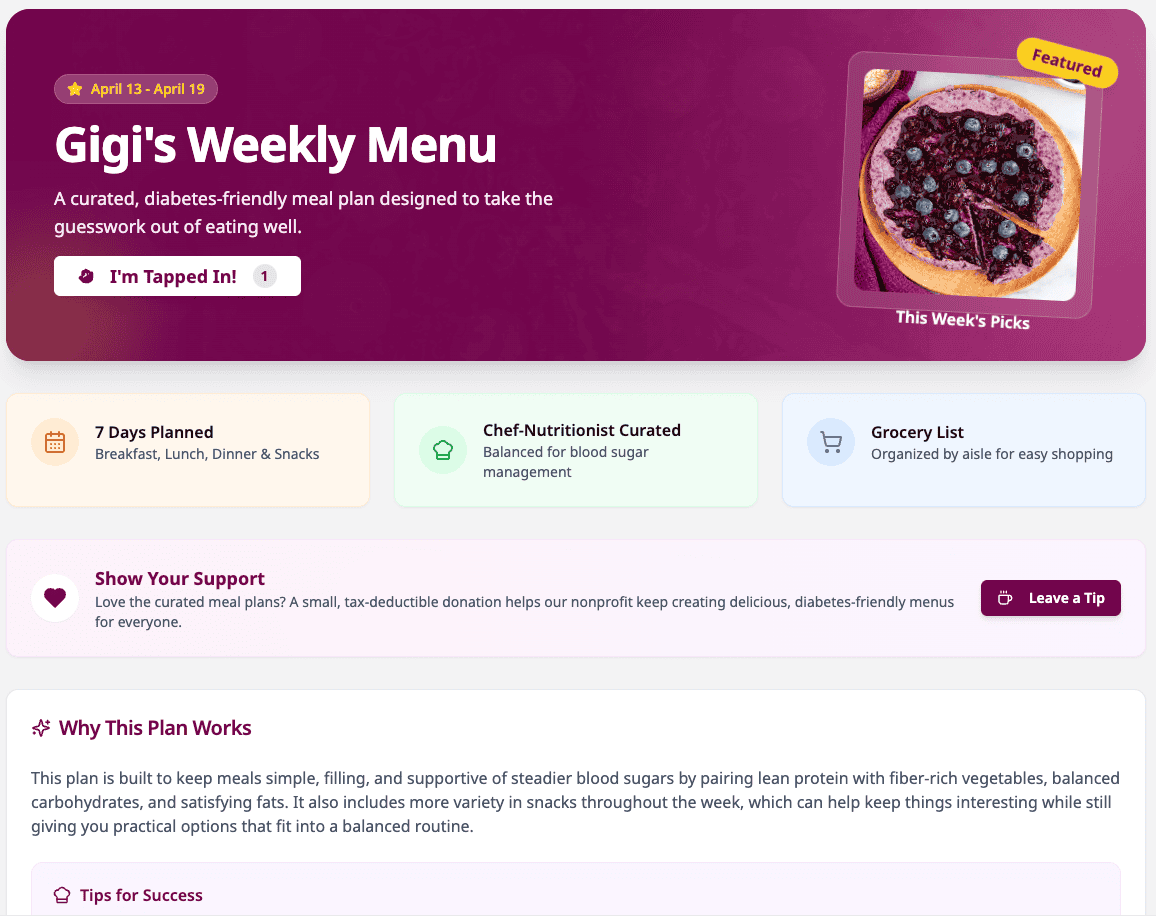
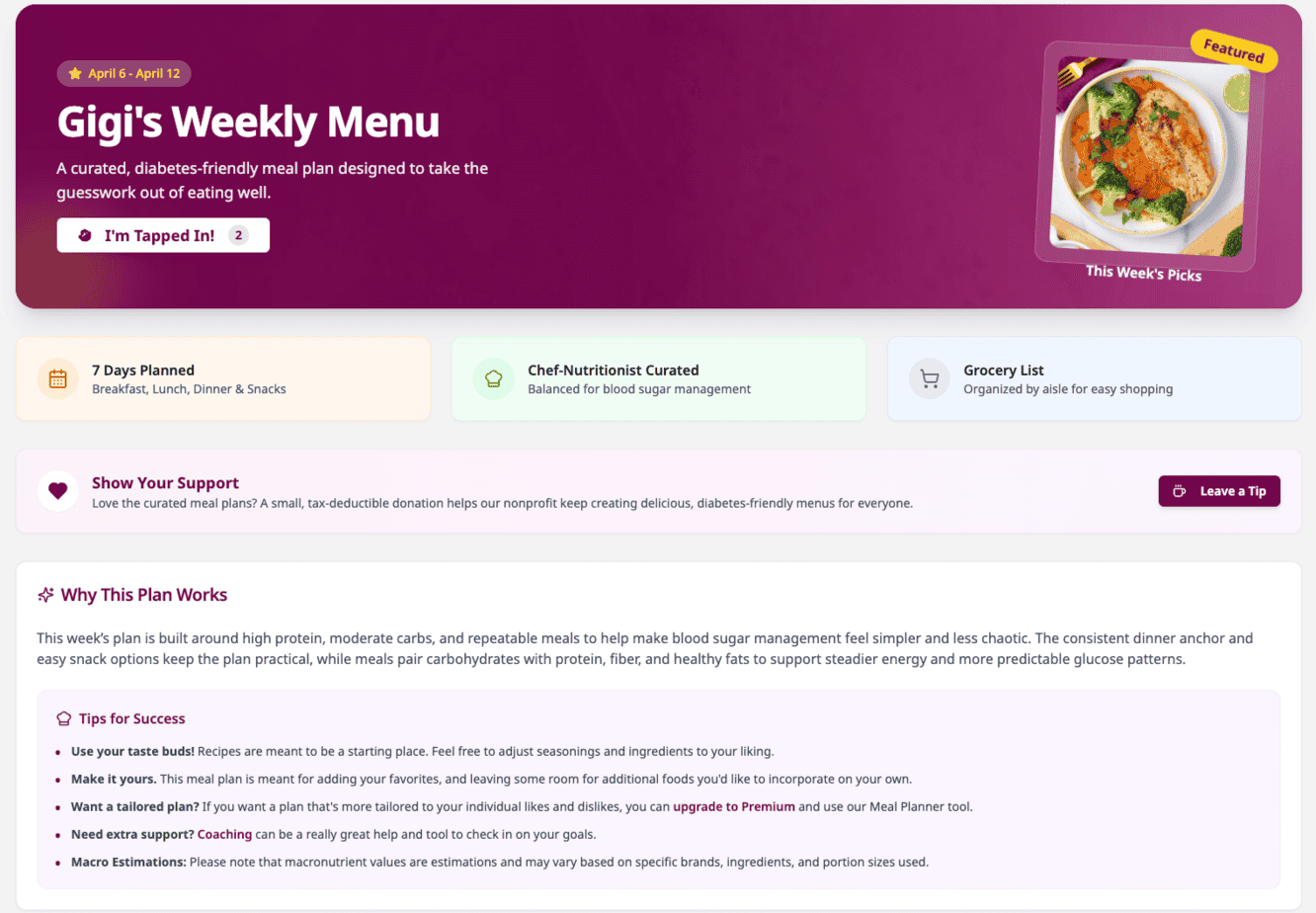
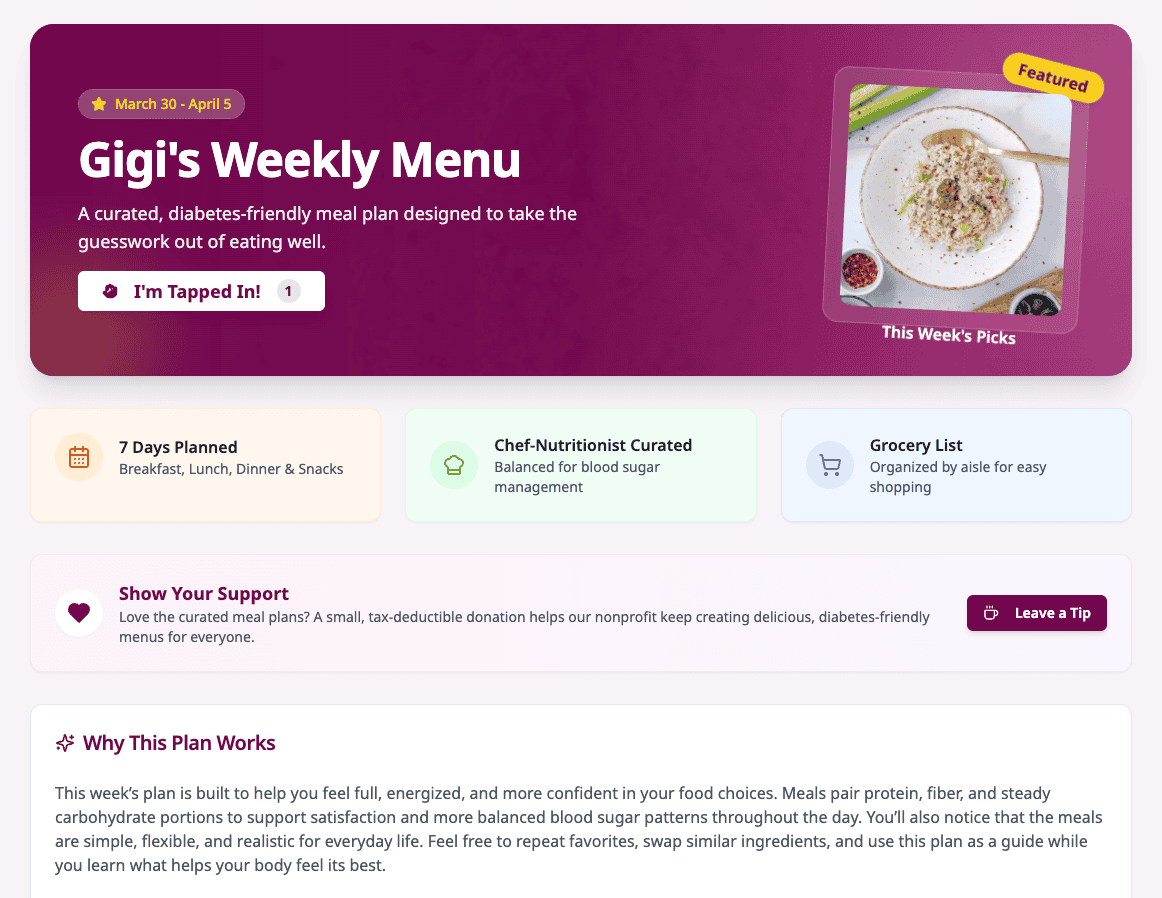
Knowing what to eat every day is exhausting. That’s why Glucose Guide includes weekly nutritionist-curated meal plans, personalized meal plans, automatic grocery lists, pantry tracking, and even grocery cart analysis before you check out. Instead of starting from scratch every week, users have a practical system that saves time while supporting their blood sugars.
Nutrition insights—not just numbers
One thing I learned early on is that people don’t just want data. They want context.
Glucose Guide helps explain why a food may affect blood sugar the way it does through features like Spike Risk Analysis, Smart Swaps, NOVA food processing scores, micronutrient tracking, and personalized daily AI summaries that highlight patterns and small, achievable next steps. The goal isn’t perfection—it’s helping people understand what’s happening in their own bodies.
Tracking that connects the dots
Blood sugar is only one piece of the picture.
Users can track glucose readings, medications, insulin, activity, mood, sleep, A1C estimates, and more, allowing them to see how all of these pieces interact over time. Instead of isolated numbers, Glucose Guide helps reveal patterns that are often difficult to recognize on your own.
Real coaching from someone who’s been there
Technology is powerful, but it isn’t everything.
As someone living with LADA myself, I use my own app most days, and I knew that it had to speak our language. That’s why members have access to Coach Mila, weekly coaching insights, one-on-one coaching programs, and practical daily guidance rooted in both lived experience and evidence-based nutrition. It’s support that feels like talking with your diabestie—who also happens to have the training to help.
Community and motivation that lasts
Managing diabetes can be incredibly isolating, so community has always been part of the mission.
Glucose Guide includes a private community, habit change programs, milestone badges, and even tools to help people locate food assistance resources in their local area.
Built for accessibility—not exclusivity
One of the things I’m most proud of isn’t a feature at all.
Glucose Guide is a nonprofit because I never wanted cost to be the reason someone couldn’t access better diabetes support.
Many of our core tools—including food search, barcode scanning, glucose tracking, grocery planning, community, and educational resources—are completely free. Premium memberships unlock advanced analysis features and personalized coaching, but every membership also helps us continue offering free nutrition resources to thousands of people around the world.
That model has allowed us to build something I’m incredibly proud of: a diabetes toolkit that doesn’t ask people to choose between affordability and quality. It gives them both.
So, that’s it. That’s the blog post.
I’m working toward doing something good. I want everyone to know about it. Everyone should have access.
I have the credentials. I’ve literally BUILT IT. Thousands of people use it. There’s no reason that this shouldn’t succeed.
So, I hope you download Glucose Guide, and you follow along in this journey.