Amyotrophy (a-my-AH-truh-fee)
A type of neuropathy resulting in pain, weakness and/or wasting in the muscles.
Home » Hangry Woman Blog Posts » Diabetes » Amyotrophy (a-my-AH-truh-fee)
Transform the way you manage diabetes with free tools and support designed just for you from a board certified health coach.
🥐 Carb estimation and analysis tools.
🍳 Cook with Confidence: Meal plans, grocery lists + carb tracking.
💡 Coaching at Your Fingertips: Expert guidance to stay on track
🤝 Join a Thriving Community: Connect with others who get it
💪 Build Your Confidence: Take charge of your health with ease
🚫 No Display Ads
Feel supported, empowered, and in control.
Share
A type of neuropathy resulting in pain, weakness and/or wasting in the muscles.

This free January 12 meal plan for type 2 diabetes and prediabetes focuses on simple, protein-forward meals that support steadier blood sugars and real-life flexibility.

The new Dietary Guidelines for Americans promise big changes—but what do they really mean for people with diabetes? Here’s the nuance you need to know.
This content contains affiliate links, which helps hangrywoman.com to provide free recipes and resources. As an Amazon Associate, I earn from qualifying purchases. Thank you for your support of the blog.
Lasagna is one of those meals people often assume is “off limits” if they’re managing diabetes.
It’s layered, carb-forward, and traditionally built around a full box of pasta.
But here’s the thing I’ve learned as a nutrition professional and someone living with diabetes: it’s rarely the food itself that’s the problem—it’s the proportions.
This stovetop lasagna keeps everything people love about the dish—rich sauce, melty cheese, and savory protein—while dialing back the parts that tend to spike blood sugar. The result is a cozy, satisfying meal that works with blood sugar management, not against it.

The biggest difference between this recipe and a traditional lasagna is pasta quantity.
Classic lasagna recipes often use 9–12 sheets of noodles layered throughout the dish.
This stovetop version uses just four sheets total, broken into pieces and distributed evenly through the sauce. That simple change significantly lowers the total carbohydrate load per serving while preserving the texture and experience of eating lasagna.
Instead of relying on pasta as the main structure, this recipe leans into:
You’re not removing carbs—you’re right-sizing them, which is often a more realistic and sustainable approach for people with diabetes.

Lasagna gets a bad reputation, but nutritionally speaking, it has a lot going for it when built thoughtfully.
Protein from meat and dairy supports muscle health and helps meals feel satisfying longer.
Dairy ingredients like ricotta and mozzarella provide calcium and help fat-soluble vitamins get absorbed into the body.
Tomato sauce contributes antioxidants, including lycopene, which has been linked to heart health—an important consideration for people with diabetes.
The challenge with traditional lasagna isn’t the ingredients themselves; it’s that the balance tends to tip heavily toward refined carbohydrates.
By shifting the ratio toward protein, fat, and sauce—and away from excess pasta—you keep the nutritional benefits while reducing the blood sugar impact.
This stovetop lasagna is a great example of scaling down without sacrificing satisfaction.
Instead of layering noodles edge-to-edge, the pasta is broken into large pieces and cooked directly in the sauce.
Each bite still includes noodle, but it’s no longer the dominant component. Cooking everything in one pan also allows the starch from the pasta to thicken the sauce naturally, so you get richness without needing extra ingredients.
Because the dish is made on the stovetop, it’s faster, easier to portion, and more adaptable.
Want more protein? Add it. Need a slightly smaller carb portion? Serve it with a vegetable side instead of garlic bread. This flexibility matters for people managing blood sugar day-to-day.
Living with diabetes doesn’t mean giving up comfort food. It means learning how to build meals that feel good and support your health goals.
This stovetop lasagna proves that you don’t need extreme substitutions or carb elimination to enjoy familiar favorites. Sometimes all it takes is fewer noodles, better balance, and a willingness to rethink tradition just enough to make it work for real life.
If you’re looking for a lasagna recipe that’s cozy, satisfying, and more blood-sugar-friendly, this one earns a spot in regular rotation.
Print
5 Stars 4 Stars 3 Stars 2 Stars 1 Star
No reviews
This is a lower-carb take on classic lasagna—not because carbs are bad, but because portioning matters. Instead of a full box of noodles, this recipe uses just 4 sheets, broken up and layered into the sauce so you still get that lasagna vibe without the carb overload.
Olive oil – 1 Tbsp | 15 ml
Wagyu ground beef – 1 lb | 454 g
Salt – 2 tsp | ~10 g
Italian seasoning – 2 tsp | ~4 g
Garlic powder – 2 tsp | ~6 g
Dried rosemary – 1 tsp | ~1 g
White onion, finely chopped – 1/4 medium | ~40 g
Garlic, minced – 5 cloves | ~15 g
Red sauce – 24 oz | 680 g
Ricotta – 1/2 cup | ~120 g
Fresh whole-milk mozzarella ciliegine – 5-6 balls | ~110 g, torn
Lasagna noodles – 4 sheets | ~55-60 g dry
Chopped parsley, for garnish
Optional: crema or cream drizzle
Heat a large, deep skillet over medium heat. Add olive oil.
Add ground beef, salt, Italian seasoning, garlic powder, and rosemary. Cook until browned, breaking it up as it cooks.
Add onion and garlic. Cook 2–3 minutes until soft and fragrant.
Stir in red sauce and bring to a gentle simmer.
Break lasagna noodles into large pieces and press them into the sauce so they’re mostly submerged.
Cover and simmer 12–15 minutes, stirring occasionally, until noodles are tender. Add a splash of water if needed.
Spoon ricotta over the top in dollops, then add torn mozzarella.
Cover and cook 2–3 minutes until the cheese melts.
Finish with parsley and an optional drizzle of crema.
Buy Now → This content contains affiliate links, which helps hangrywoman.com to provide free recipes and resources. As an Amazon Associate, I earn from qualifying purchases. Thank you for your support of the blog.
Some weeks, the hardest part of eating well isn’t the cooking—it’s deciding what’s worth the effort. When every meal feels like a blood sugar experiment, decision fatigue hits fast. This is where a thoughtful plan can actually help.
This free type 2 diabetes meal plan was built to remove the mental gymnastics while still leaving room for choice.
It’s structured enough to support steadier blood sugars, and flexible enough to work in real life—especially if you’re navigating type 2 diabetes or prediabetes.

This isn’t a “cut everything out and hope for the best” situation. The meals in this week’s plan are designed around patterns that tend to support glucose stability:
Most importantly: nothing in this plan is meant to feel punishing. Food should feel supportive, not like a test you’re constantly failing.
Here’s what you’ll actually be eating during the January 5 week—because “meal plan” means nothing if the food isn’t appealing.
These diabetes-friendly recipes are also built to be meal-prep friendly. So, if you like to make your food ahead, this is a helpful list.
Tofu Scramble with Spinach
A high-protein, low-carb breakfast that uses warm spices and leafy greens to create something hearty without heaviness. It’s a great option if eggs don’t work for you—or if you want a breakfast that keeps you full through the morning without a big spike.
Chia Pudding with Berries
Fiber-rich, prep-ahead friendly, and easy to customize. This one works well for prediabetes and type 2 diabetes because the fiber in chia seeds slows digestion and helps reduce glucose swings.
Baked Salmon with Asparagus
Simple, weeknight-friendly, and loaded with protein and healthy fats. This is the kind of dinner that supports blood sugar and feels like a proper meal, not a compromise.
Turkey Meatballs with Cauliflower Rice
Comfort food energy, minus the crash. These meatballs are protein-forward and pair well with cauliflower rice for a lower-carb, high-satiety dinner that still feels cozy.
Zucchini Noodles with Pesto
For anyone who’s been burned by sad “low-carb pasta,” this one surprises people. The pesto brings flavor and fat, while the zoodles keep things light and blood-sugar-friendly.
Almond Flour Pancakes with Berries
Yes, pancakes. Balanced with protein and fat so breakfast doesn’t send your glucose on a rollercoaster.
And throughout the week, snacks are kept simple—things like almonds, walnuts, pumpkin seeds, cucumber with guacamole—so you’re not constantly overthinking between meals.
You don’t have to eat these meals in order. You don’t have to eat every snack. You don’t have to “start over” if you swap a lunch or repeat a dinner you loved.
This flexible meal plan for type 2 diabetes is meant to be used—not followed perfectly. Repetition is allowed. Convenience is encouraged. Real life is assumed.
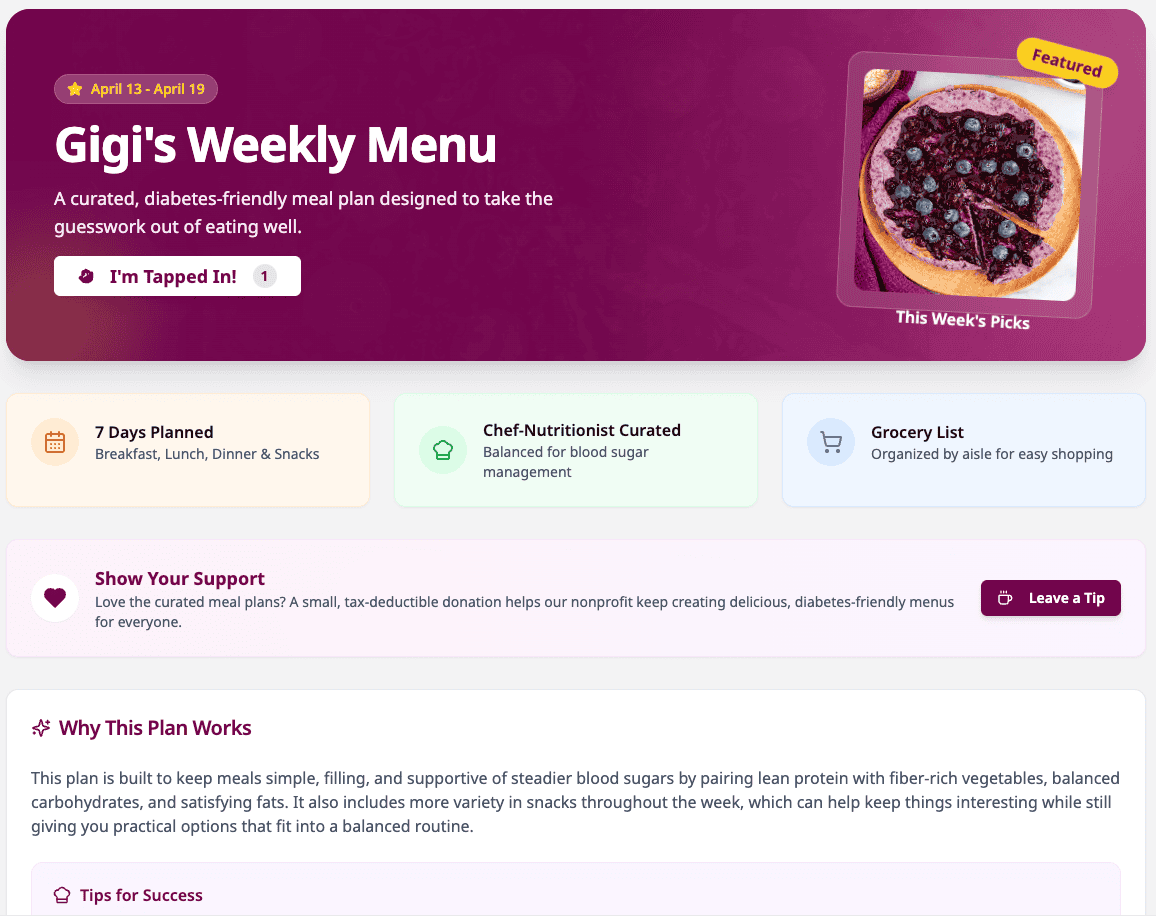
The full January 5 weekly meal plan—including recipes, estimated macros, and daily totals—lives inside the Glucose Guide app.
You can view the weekly menu in the app:
👉 https://nutrition.glucoseguide.app/weeklymenu
Inside the app, you’ll be able to:
If food has felt like the most stressful part of managing type 2 diabetes or prediabetes, this is your invitation to make it simpler—and a lot more enjoyable.
This content contains affiliate links, which helps hangrywoman.com to provide free recipes and resources. As an Amazon Associate, I earn from qualifying purchases. Thank you for your support of the blog.
Frozen vegetables don’t get enough credit.
They’re often treated like a backup plan, when in reality they’re one of the most reliable tools for eating well with diabetes—especially on busy, low-energy, or “I cannot deal with another decision today” days.
Here’s the truth I see over and over as a nutritionist and chef: consistency beats perfection.
Frozen vegetables help you show up consistently without adding stress, waste, or unrealistic expectations.
They’re picked at peak ripeness, frozen quickly to lock in nutrients, and they wait patiently in your freezer until you’re ready.
No pressure. No judgment. No slimy, moldy produce drawer needed.

You’ll find most of these year-round at any major grocery store.
These are workhorse veggies.
They’re low in carbs, high in fiber, and easy to pair with protein and fat for steadier blood sugar responses.
They work in stir-fries, sheet-pan meals, soups, pasta, eggs—pretty much everything.
These tend to be a little higher in natural carbohydrates, which doesn’t make them “bad.” It just means they shine when paired intentionally—with protein, fat, and fiber to slow digestion and smooth out glucose response.
These are excellent for bulking up meals without dramatically changing carb load.
Riced vegetables are especially useful for people who want flexibility—half rice, half cauliflower rice is a very normal, very realistic strategy.
Edamame deserves special recognition. It provides plant-based protein, fiber, and carbs in one neat package, which makes it incredibly useful for bowls, salads, and quick snacks.
Frozen blends are underrated. They remove multiple prep steps at once and make it easier to actually cook instead of ordering takeout because chopping feels like too much.
From a diabetes nutrition perspective, frozen vegetables solve several real-world problems:
They’re predictable. You know exactly what you’re getting nutritionally, and portions are easy to measure or eyeball.
They reduce friction. Fewer steps between “I should eat something balanced” and “I am eating something balanced” matters more than most nutrition advice acknowledges.
They reduce waste. No guilt over throwing away produce you didn’t get to in time.
They’re accessible. Frozen vegetables are often more affordable and available than fresh produce, especially for people shopping on a budget or with limited grocery access.
And importantly: they help people eat more vegetables overall. That’s the win.
Not all frozen vegetables are created equal, but the rules are simple.
Look for plain vegetables with no added sauces or seasoning blends if you want maximum flexibility. Sauced versions aren’t wrong—they’re just less adaptable and sometimes higher in added sugars or sodium.
Check the ingredient list. Ideally, it should say one thing: the vegetable.
Steam-in-bag options can be helpful, but stovetop or oven reheating often gives better texture and flavor, especially if you’re adding oil, spices, or sauces yourself.
Frozen vegetables don’t need to be boring. They just need heat, fat, and seasoning.
Roast them at high heat with olive oil, salt, and pepper.
Sauté them straight from frozen in a hot pan.
Add them to soups, stews, chili, and pasta sauces.
Fold them into eggs, casseroles, grain bowls, and rice dishes.
Texture improves dramatically when you avoid overcrowding the pan and let moisture cook off instead of steaming everything into submission.
Frozen vegetables are not a shortcut—they’re a strategy.
They support blood sugar balance, reduce decision fatigue, and make balanced meals more accessible in real life. For people managing diabetes, prediabetes, or just the general chaos of adulthood, that matters more than chasing an idealized version of “fresh only” eating.
Your freezer doesn’t need to look fancy. It just needs to be functional.
And frozen vegetables do that job beautifully.
This content contains affiliate links, which helps hangrywoman.com to provide free recipes and resources. As an Amazon Associate, I earn from qualifying purchases. Thank you for your support of the blog.
If you’ve ever searched for a type 2 diabetes diet meal plan or guidance for prediabetes, you’ve probably noticed something frustrating: there’s not a lot of flexibility
Real life is messier than that.
As a board certified health and wellness coach, chef and nutritionist, I created this healthy meal plan for type 2 diabetes and prediabetes for people who want structure without rigidity, support without fear tactics, and meals that actually fit into daily life.
Whether you’re managing type 2 diabetes, living with prediabetes, or trying to prevent progression, this plan meets you where you are.

Here’s something that often gets missed: the foundations of blood sugar support are similar for both prediabetes and type 2 diabetes.

This plan focuses on:
For people with prediabetes, this structure helps improve insulin sensitivity and reduce blood sugar swings.
For people with type 2 diabetes, it supports steadier post-meal blood sugars and easier management day to day.
Different stages of diabetes. Same fundamentals.
Rigidity is one of the fastest paths to burnout—especially if you’re newly diagnosed with prediabetes or trying to avoid progression to type 2 diabetes.
This is a flexible meal plan for type 2 diabetes and prediabetes, meaning:

This free weekly meal plan includes:
In this week’s plan, you’ll see familiar, satisfying foods like:
These aren’t “diet foods.” They’re everyday meals designed with blood sugar in mind.
You don’t need to follow this plan perfectly for it to help.
Most people see the best results when they:
Blood sugar responds to patterns over time—not single meals or occasional deviations.
That’s true for prediabetes and type 2 diabetes.
This plan is a good fit if you:
It’s also a strong starting point if you’re working with a clinician, using medication, or monitoring blood sugars at home.
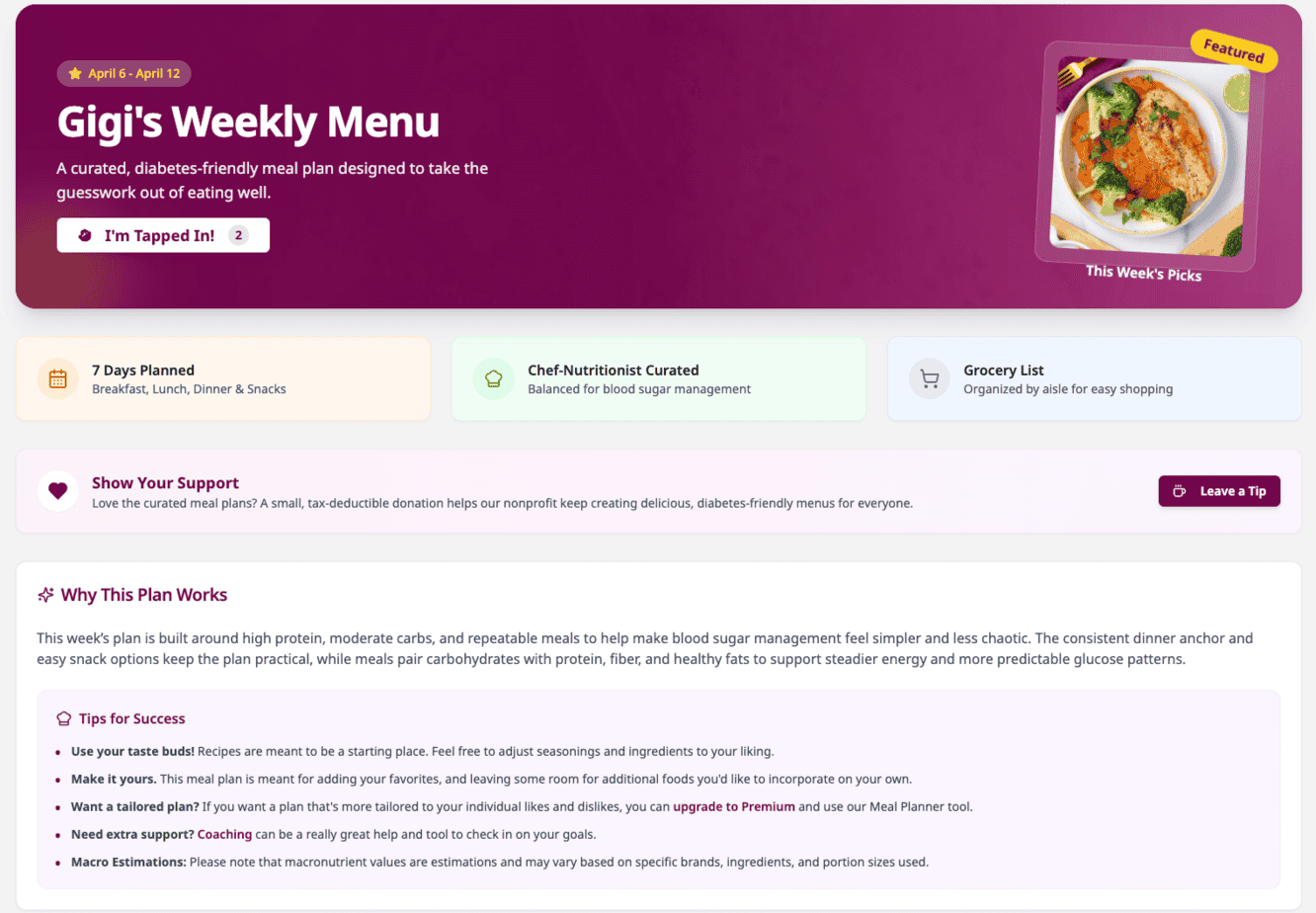
This free plan is part of the rotating weekly menus available through Glucose Guide.
You can view the current weekly menu and explore additional plans here:
👉 https://nutrition.glucoseguide.app/weeklymenu
That’s where you’ll find:
A healthy meal plan for type 2 diabetes and prediabetes doesn’t need to be extreme to be effective.
A free type 2 diabetes diet meal plan doesn’t need to be rigid to work.
And a flexible meal plan for type 2 diabetes and prediabetes isn’t “too soft”—it’s realistic.
This plan is built to support blood sugar and real life.
Because prevention, management, and sustainability all start the same way: with food that actually works for you.
This content contains affiliate links, which helps hangrywoman.com to provide free recipes and resources. As an Amazon Associate, I earn from qualifying purchases. Thank you for your support of the blog.
Prediabetes is exactly what it sounds like: your blood sugar is higher than “typical,” but not high enough to be diagnosed as type 2 diabetes.
It’s also one of the most actionable health wake-up calls on the planet—because small, consistent changes can meaningfully lower risk. (CDC)
Quick note: This guide is educational, not personal medical advice. If you’re pregnant, trying to become pregnant, or you’re worried about symptoms, loop in your clinician.
Clinicians diagnose prediabetes using blood tests, not vibes (sadly). The most common thresholds:
Yep. 5.7% is the start of the prediabetes range for A1C. It doesn’t mean you’re “basically diabetic.” It means you’re in the zone where prevention and reversal can be possibilities. (CDC)
Ask your clinic for one of these:
You can collect clues at home, but you can’t truly “diagnose” prediabetes without a proper test and physicians asses
At-home options:
If you’re using a glucometer or a continuous glucose monitor:
This is not a diagnosis—think of it as “data for your next appointment.” If you see blood sugars that are out of range, its a great time to share that information with your healthcare provider, so that they can help you monitor your progression.
Here’s the tricky truth: prediabetes often has no obvious symptoms. (Mayo Clinic)
So instead of “10 guaranteed warning signs,” here are 10 common clues that can suggest insulin resistance or rising blood sugar (and are worth testing for):
If you’re experiencing classic diabetes symptoms (thirst, frequent urination, fatigue, blurry vision), get checked sooner rather than later. (American Diabetes Association)
Prediabetes usually doesn’t cause nausea. (Mayo Clinic)
Nausea is more likely when blood sugar is very high or when someone is getting seriously ill (for example, diabetic ketoacidosis is an emergency and includes nausea/vomiting as possible symptoms).
If you have nausea plus severe thirst, vomiting, belly pain, confusion, or feel very unwell—treat that as urgent. (Mayo Clinic)
Yes—many people return to a normal range, especially with sustained lifestyle changes.
The point isn’t perfection; it’s lowering risk and improving how your body handles glucose.
The CDC’s prevention guidance focuses on 5% to 7% weight loss (if you have overweight) and 150 minutes/week of activity, like brisk walking. (CDC)
Prediabetes is usually driven by insulin resistance, meaning your body needs more insulin than before to keep blood sugar in range.
Genetics, sleep, stress, certain medications, PCOS, weight changes, activity level, and dietary patterns can all contribute. (It’s not a moral failing. It’s biology + environment doing a messy little duet.)
Cutting back on added sugars can help, but “just remove sugar” is usually too simplistic.
Why? Because blood sugar response is influenced by:
Most people do better with “build balanced meals you can actually live with” than “banish sugar and white-knuckle it.”
The fastest real progress tends to come from a few boring, powerful basics (boring = effective, unfortunately):
Two weeks can improve some numbers (like daily glucose patterns), but it usually won’t transform an A1C dramatically, because A1C reflects roughly 2–3 months of blood sugar history.
In other words: you can start strong in two weeks, but you’re playing a longer (lifelong) game. (American Diabetes Association)
Walking is one of the best “return on effort” tools we’ve got. The CDC points to 150 minutes/week of brisk walking (or similar activity) as a key prevention target. (CDC)
Sleep is a blood sugar lever people underestimate because it’s not sold in a shiny bottle.
When sleep is short or disrupted, studies show links to worse glucose metabolism and higher risk of diabetes/prediabetes.
Clinically, many experts encourage aiming for at least 7 hours when possible. (CDC Stacks)
It can matter, because pregnancy is already a major metabolic event.
If you’re pregnant or planning pregnancy, it’s smart to discuss screening and targets early with your OB-GYN or care team. You want to be sure you have great to optimal control for a healthy pregnancy and delivery. (ACOG)
Kids and teens are not “small adults,” so the plan should always be clinician-guided.
Screening is often risk-based (for example, based on age/puberty status plus weight percentile and other risk factors), and the approach usually centers on family-based nutrition patterns, activity, sleep, and mental well-being.
There is no evidence that asymptomatic children should be screened. (USPSTF)
Instead of a “never eat” list (because that’s how we end up in a pantry fistfight at 10 p.m.), think in patterns:
Foods that often spike blood sugar more easily (especially alone):
All of these foods are ones that we want to enjoy in moderation, and on occasion.
Foods that tend to support steadier glucose:
All of these foods in different combinations give
The ADA summarizes healthy eating for blood sugar support as focusing on quality foods and sustainable habits—not punishment. (American Diabetes Association)
No drink “reverses” prediabetes like it’s a magic spell—but swapping drinks can be a huge win.
Most helpful swaps:
If your biggest daily sugar source is drinks, this is often a high-impact place to start.
There isn’t one universal snack crown (blood sugar is annoyingly personal), but the best bet is usually:
A snack with protein + fiber (and maybe some fat)
If you want an ultra-simple default: a handful of nuts + a piece of fruit is a classic “steady energy” combo.
If you’re reading this because you’re worried, overwhelmed, or tired of generic advice like “just eat better,” you don’t need another lecture.
Glucose Guide helps you turn “I should…” into “Here’s what I’m doing this week.”
Use the Diabetes Food Journal to log meals and spot patterns without shame-spiraling, then adjust with real-world swaps you can repeat. Start here: https://heygigi.app. You can also join my community
Prediabetes isn’t a personal failure. It’s a data point—and you’re allowed to respond with support instead of stress.
This content contains affiliate links, which helps hangrywoman.com to provide free recipes and resources. As an Amazon Associate, I earn from qualifying purchases. Thank you for your support of the blog.

Short answer before we zoom in: fish does not raise blood sugar on its own. Long answer? Let’s unpack the questions people are clearly Googling at 2 a.m.
No. Fish contains zero carbohydrates, which means it doesn’t directly raise blood glucose.
What can affect blood sugar is how the fish is cooked and what it’s served with. Deep-fried fish, sugary glazes, or breaded coatings are a different story.
Fish itself? Neutral to friendly for blood sugars.
On its own, no. Paired with refined carbs, heavy sauces, or eaten in very large portions without balance, you may see changes — but that’s not the fish doing anything sneaky.
Yes. Fish is one of the most consistently recommended protein sources for people with diabetes because it’s:
The American Diabetes Association includes fish as a recommended lean protein option for diabetes-friendly eating patterns.
You’ll see this question phrased about 15 different ways, so here’s the unified answer.
These fish are either rich in omega-3 fatty acids (great for heart health) or lean, high-protein options that are easy on blood sugar.
No. Salmon does not raise blood sugar. It’s carb-free and rich in omega-3s, which may support insulin sensitivity and cardiovascular health.
Yes — and honestly, white fish deserves more love.
White fish is especially helpful if you’re aiming for lighter meals or pairing protein with vegetables or whole grains.
Here’s a clean, blog-ready section you can drop straight into the post to expand on white fish specifically. It answers the intent behind “which white fish?” without sounding like a seafood encyclopedia had too much coffee.
White fish is a broad category, not a single species, and that’s good news. It gives you options depending on taste, budget, texture preferences, and how you like to cook.
All of the fish below are naturally low in carbohydrates, high in protein, and gentle on blood sugar when prepared simply.
Cod is one of the most popular white fish for a reason. It’s mild, flaky, and holds up well to baking and pan-searing. Nutritionally, cod is low in fat and high in protein, making it a solid choice if you’re looking for something filling without being heavy. Cod works especially well with sauces like lemon, mustard, or herbs because it absorbs flavor easily.
Haddock is similar to cod but slightly sweeter. It’s often used in fish stews and baked dishes and has a tender texture that cooks quickly. From a blood sugar perspective, haddock behaves much like cod — neutral, predictable, and easy to pair with vegetables or whole grains.
Pollock is lean, affordable, and often overlooked. It’s commonly used in fish sticks and fast-food sandwiches, but the fish itself is a great option when baked or grilled at home. Pollock is very low in fat and calories, making it a good choice if you’re watching portion sizes while still prioritizing protein.
Tilapia has a very mild flavor and soft texture, which makes it approachable for people who don’t love “fishy” fish. It’s widely available and budget-friendly. While tilapia is lower in omega-3 fats than salmon, it’s still a lean protein that doesn’t raise blood sugar on its own. Cooking method matters here — baked or pan-seared beats breaded and fried every time.
Halibut is firmer and slightly richer than other white fish, which makes it satisfying and versatile. It works well grilled, roasted, or baked and pairs nicely with simple seasonings. Because it’s denser, halibut can feel more filling, which may help with appetite regulation and meal satisfaction.
These are delicate, thin white fish with a very mild taste. They cook quickly and are best with gentle methods like pan-searing or baking. Because they’re lighter, they’re often paired with sauces or fats — which can actually be helpful for blood sugar balance when done thoughtfully.
There isn’t one best white fish — the best option is the one you’ll actually eat and enjoy.
From a diabetes standpoint, all of these fish:
The bigger factor is how the fish is prepared and what it’s served with, not the species itself.
Baking, grilling, or pan-searing with fats like olive oil or butter and pairing with fiber-rich vegetables supports steadier blood sugars far more than chasing a “perfect” fish.
The American Diabetes Association includes fish — both fatty and lean — as a recommended protein choice for people with diabetes.
The USDA nutrient database also shows white fish to be consistently low in carbohydrates and high in protein.
White fish is a reliable, low-stress protein option for diabetes management. It doesn’t spike blood sugar, it’s easy to cook, and it works with a wide range of flavors. Whether you choose cod, haddock, tilapia, or halibut, the goal isn’t perfection — it’s building meals that feel doable, satisfying, and repeatable.
That’s exactly where recipes like this Baked Fish with Lemon Sauce shine — simple ingredients, predictable blood sugar response, and zero drama.
Most guidelines recommend 2 servings of fish per week, especially fatty fish like salmon. White fish can be eaten more frequently since it’s lower in fat and calories.
More fish ≠ better blood sugar magically — but regular inclusion can support heart health, which matters a lot in diabetes management.
Cooking method matters more than the fish itself.
This baked fish with lemon sauce works well because it keeps carbs low while adding flavor from fat, acid, and aromatics — not sugar.
Neither is “better” in a universal way.
Rotation and variety are important. Variety helps nutrient intake and prevents food boredom — which is very real.
No food directly lowers blood sugar in a reliable, medical sense. Fish doesn’t reduce glucose levels on demand — but it supports better overall blood sugar management by providing protein without carbs and helping meals feel more balanced.
Fish — especially white fish and fatty fish like salmon — is a diabetes-friendly protein that doesn’t spike blood sugar and fits easily into balanced meals. The real magic isn’t the fish itself; it’s how you build the plate around it.
That’s exactly why tools like the Diabetes Food Journal exist inside Glucose Guide — not to judge meals, but to help you notice patterns, without food shame or miracle nonsense.
Print
5 Stars 4 Stars 3 Stars 2 Stars 1 Star
No reviews
This recipe is naturally low in carbs and high in protein, which helps support steadier blood sugars. The fat from butter and cream slows digestion just enough to keep things balanced, while the lemon and mustard keep the flavor bright instead of heavy.
Buy Now →
I’m a board certified health and wellness coach and a public health nutritionist with a Master’s degree in Applied nutrition.
I live with LADA (Latent Autoimmune Diabetes in Adults, a slow-progressing form of autoimmune Type 1 diabetes) I love food, travel, and my kitchen, and teaching you about diabetes self-management.
I’m here to help you live your best life possible diabetes by showing you how to create simple, blood-sugar friendly and delicious meals and tips on diabetes self-care.
Be sure to download my FREE Diabetes Community App Glucose Guide, or reach out for FREE 1:1 diabetes health and habit coaching.
Before you go…
Ad-free recipes, bookmark your favorites, free live learning events, get special deals and discounts on Nutrition Assistant, and free coaching opportunities. Why not?