
This content contains affiliate links, which helps hangrywoman.com to provide free recipes and resources. Thank you for your support of my blog and non-profit organization, Glucose Guide.
For a lot of people with type 2 diabetes, basal insulin is helpful in lowering blood sugars properly. Daily injections can feel like a lot to remember, a lot to manage, and honestly, one more thing on an already crowded to-do list.
That’s part of what makes Awiqli such an interesting option.
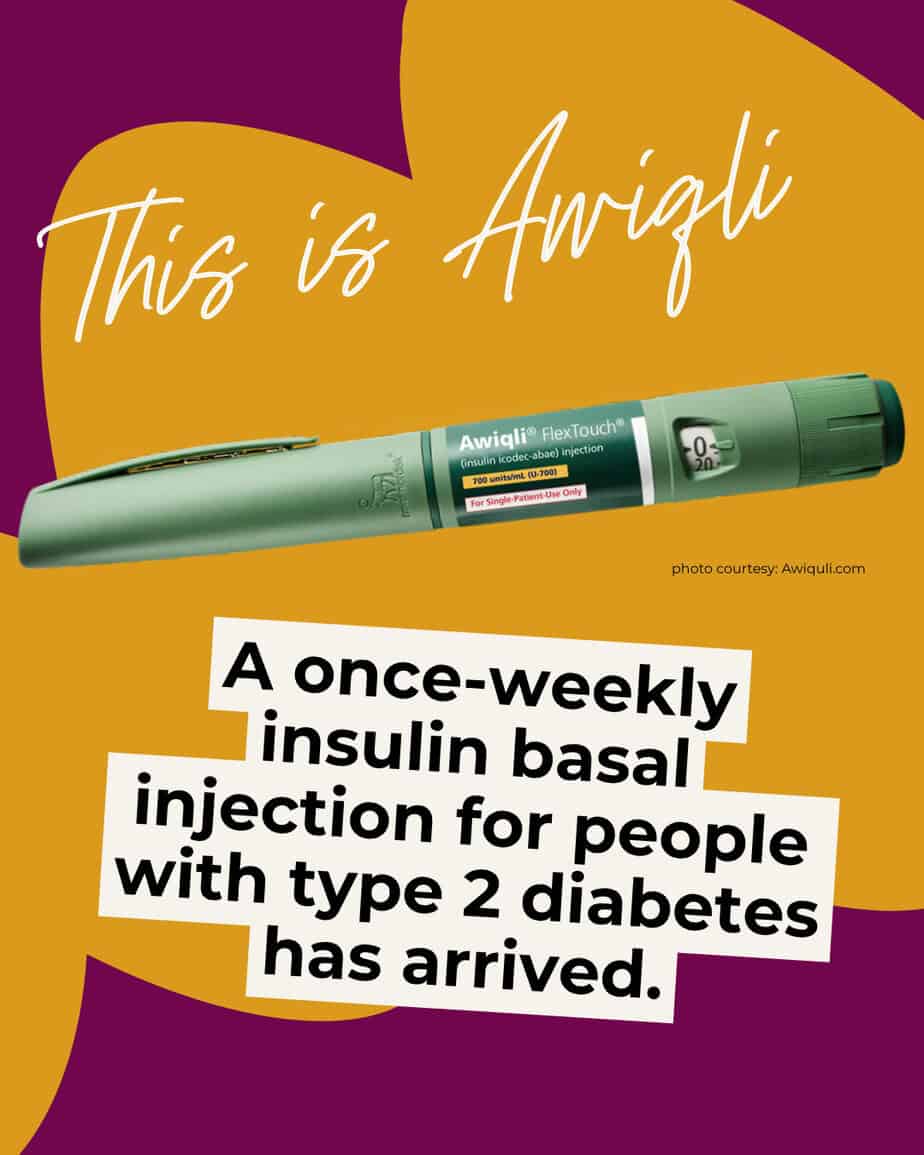
Awiqli is the first FDA-approved once-weekly basal insulin for adults with type 2 diabetes. It was approved on March 26, 2026, and Novo Nordisk says it is expected to reach pharmacies in summer 2026. It’s designed to offer an alternative to daily basal insulin, which means some people may go from seven basal injections a week to one.
That is a big shift.
And like most big shifts in diabetes care, it comes with both excitement and important caveats.
Table of contents
- The quick answer: Why is Awiqli different from other Basal Insulin Options?
- What is Awiqli?
- Why some people may be excited about a once-weekly basal insulin
- The pros of Awiqli
- The cons and caution points
- Why talking with your care team matters so much here
- What about cost?
- Why support tools still matter, even with a once-weekly insulin
- My take as a coach
- Bottom line
- Sources
The quick answer: Why is Awiqli different from other Basal Insulin Options?
Awiqli is interesting because it changes the schedule of basal insulin from daily injections to weekly ones for adults with type 2 diabetes.
That could make insulin therapy feel more manageable for some people, especially those who struggle with missed daily doses, routine fatigue, or just the mental load of diabetes care.
The approval was based on the ONWARDS phase 3a clinical program, which Novo Nordisk says showed A1C reduction across its pivotal trials, with a safety profile overall consistent with the daily basal insulin class.
But “interesting” does not automatically mean “best for everyone.”
A weekly insulin still needs careful dosing, education, follow-up, and real-life support. Because the dose lasts longer, changes may feel higher stakes, and that makes conversations with your care team even more important.
Awiqli’s own prescribing and safety information emphasizes using it exactly as directed, checking blood sugar, and getting training on proper dosing and pen use.
What is Awiqli?
Awiqli, also called insulin icodec-abae, is a long-acting basal insulin used along with diet and exercise to help control high blood sugar in adults with type 2 diabetes.
It is not approved for children or adolescents, and the current public-facing patient information describes it specifically for adults with type 2 diabetes.
This matters because when people hear “new insulin,” they sometimes assume it applies across the board. Right now, the official US approval language is for adults with type 2 diabetes.
Why some people may be excited about a once-weekly basal insulin
There are a few reasons this could be meaningful.
1. It may reduce the day-to-day burden of insulin therapy
Taking basal insulin every day can be simple for some people and exhausting for others. A once-weekly option could help reduce treatment fatigue. If daily injections are a barrier, moving to one scheduled basal shot per week may feel more doable.
Novo Nordisk positions Awiqli as an alternative to daily basal insulin, and its press release specifically highlights the shift from seven injections a week to one.
2. It could support adherence for some people
A lot of diabetes care success is not about perfection. It is about what a person can realistically sustain.
If someone forgets daily basal insulin often, a weekly schedule might fit their life better. Novo Nordisk’s release also points to research suggesting weekly injectable diabetes medications may be associated with improved adherence, though whether that plays out for a specific person depends on their habits, support, understanding of the medication, and follow-up.
3. It adds another option to personalized care
I’m always in favor of more options when those options are used thoughtfully.
Some people do well on daily basal insulin and may have no reason to switch. Other people may find that a weekly option better matches their routine, work schedule, caregiving load, travel, or ability to remember medications.
Awiqli is interesting because it expands the conversation, and adds not because it magically solves diabetes.
The pros of Awiqli
Here are the biggest potential upsides, based on what is currently known.
Fewer injections
The obvious one: once weekly instead of once daily. That reduction alone may feel significant for some people.
A new option for people who struggle with daily routines
Some people with type two diabetes want insulin support but have a hard time building a daily injection habit. A weekly basal insulin may feel more realistic and less disruptive.
Strong interest for people who want simpler treatment rhythms
A weekly schedule may be easier to anchor to a routine like “every Sunday morning” or “every Friday evening,” which can be helpful when building habits around diabetes care. Awiqli is intended to be taken once each week on the same day each week.
Clinical data supporting approval
The FDA approval was based on the ONWARDS type 2 diabetes phase 3a program, which included about 2,680 adults with uncontrolled type 2 diabetes and showed A1C reduction across the pivotal program.
The cons and caution points
Weekly does not mean lower effort
A once-weekly injection may reduce frequency, but it does not remove the need to understand insulin. You still need to know when you take it, how to take it, how to monitor blood sugar, and what to do if something feels off.
The official information says people should take it exactly as directed, check blood sugar, and get instruction from their healthcare provider before first use.
Dosing errors could be a big deal
Awiqli uses a U-700 concentration, and the pen instructions emphasize selecting the correct dose, not converting doses yourself, and not withdrawing insulin with a syringe. The safety information also warns about mix-ups with other insulin products and dosing errors.
A missed dose may feel more complicated
Because this is a weekly medication, missing a dose is not quite the same as forgetting one daily injection and resetting tomorrow. The patient information gives specific directions based on how many days have passed since the missed dose, which tells you right away that this is something people will need to understand clearly before starting.
Side effects and safety still matter
Common side effects listed by Novo Nordisk include hypoglycemia, injection-site reactions, lipodystrophy, itching, rash, swelling of hands and feet, and weight gain. The safety information also includes warnings about severe allergic reactions, low potassium, and heart failure worsening in some people taking TZDs.
It is not automatically the right fit for everyone
Some people may prefer the flexibility or familiarity of daily insulin. Others may need closer titration or may not feel comfortable with a weekly dosing rhythm. A new medication can be exciting without being universally better.
That’s why this really needs to be a care-team conversation, not a “this sounds easier on TikTok” decision.
Why talking with your care team matters so much here
I really want to emphasize this part.
Awiqli is one of those medications where convenience and complexity show up at the same time.
Yes, it’s fewer injections. But it is also a different insulin schedule, a concentrated product, and a treatment that requires careful dose selection and follow-up. The official instructions say your healthcare provider should show you how to use the pen before first use, and the safety information repeatedly stresses correct dosing and blood sugar monitoring.
That means your care team can help you think through questions like:
- Is basal insulin the right next step for me?
- Am I a good candidate for a weekly option?
- How will we titrate this safely?
- What should I watch for in my blood sugars?
- How do I handle missed doses?
- How does this fit with my other medications?
- What will my insurance actually cover?
Those questions are not “extra.” They are the work.
What about cost?
Right now, the honest answer is: we do not fully know yet.
On the Awiqli website, Novo Nordisk says it is committed to helping patients access the medications they need, and that cost and coverage information will be available when Awiqli becomes available in pharmacies. The same site says Awiqli is expected in pharmacies in summer 2026.
So yes, that is the manufacturer’s statement.
And also, let’s be real: what people actually pay is often determined by insurance coverage, formularies, prior authorization requirements, copay support, pharmacy benefit design, and whether a new drug is added quickly or slowly by a health plan. Because Awiqli is newly approved, out-of-pocket costs and coverage experiences may fluctuate during rollout. The official public information does not yet list patient cost details.
That doesn’t mean it will be unaffordable. It means it is too early to promise affordability.
If you’re interested in Awiqli, this is exactly the kind of medication where I’d tell someone to ask:
- whether their insurance has added it yet,
- whether prior authorization is required,
- whether copay cards or assistance programs will apply,
- and whether their care team has a backup plan if coverage is delayed.
Because diabetes is hard enough without getting surprise-jumped by the pharmacy counter.
Why support tools still matter, even with a once-weekly insulin
This is probably the biggest coaching point in the whole conversation.
A new insulin option can help. But the medication alone is not the whole story.
Even if a person moves from daily basal insulin to weekly basal insulin, they still need support around patterns, food, medication timing, reminders, and confidence.
Additionally, lifestyle still matters. What you eat, when you eat it, and how much you move are all incredibly important. Tools can help turn “I should probably stay on top of this” into something much more concrete and manageable.
That might look like:
- setting a weekly medication reminder,
- using a blood sugar log to notice patterns,
- tracking meals and symptoms,
- writing down questions before appointments,
- using a CGM or glucose meter more intentionally,
- or using a support app to reduce the mental load of remembering everything yourself.
This is especially important with something like Awiqli because the rhythm is different. Weekly medications can be easier to forget if they are not anchored to a routine. They can also be harder to interpret if someone is not keeping an eye on patterns between doses.
Support does not mean doing diabetes perfectly. It means having systems that make diabetes feel less chaotic.
My take as a coach
I think Awiqli is genuinely interesting.
Not because it is flashy, and not because once-weekly automatically means better, but because it reflects something people with diabetes have been saying for years: treatment has to fit real life.
For the right person, a once-weekly basal insulin could reduce burden and make insulin therapy feel more approachable. For another person, the dosing considerations, adjustment process, or insurance uncertainty may make it less appealing right now.
Both reactions are valid.
The goal is not to chase every new thing. The goal is to build a diabetes plan that is safe, sustainable, and supported.
Bottom line
Awiqli is the first FDA-approved once-weekly basal insulin for adults with type 2 diabetes, and that makes it a noteworthy new option in diabetes care.
It may reduce injection frequency and help some people feel more consistent with basal insulin, but it also comes with real considerations around dosing, education, side effects, monitoring, and cost.
If you are curious about it, talk with your care team. Ask how it compares with your current treatment, what the transition would look like, how your blood sugars would be monitored, and what coverage looks like for your specific plan.
And whether you use daily insulin, weekly insulin, or something else entirely, support tools still matter. The more you can reduce guesswork and mental load, the easier it becomes to make decisions that actually work in your real life.
If you want more support tracking meals, noticing blood sugar patterns, and making diabetes feel less overwhelming, try the Diabetes Food Journal and join the Glucose Guide Community. It’s designed to help you build awareness of diabetes management with kind, real support.
Sources
- Awiqli official website and patient FAQ: (awiqli.com)
- Novo Nordisk press release announcing FDA approval on March 26, 2026: (Novo Nordisk)