This content contains affiliate links, which helps hangrywoman.com to provide free recipes and resources. Thank you for your support of my blog and non-profit organization, Glucose Guide.
Some breakfasts look balanced on paper but do not actually keep you full for very long.
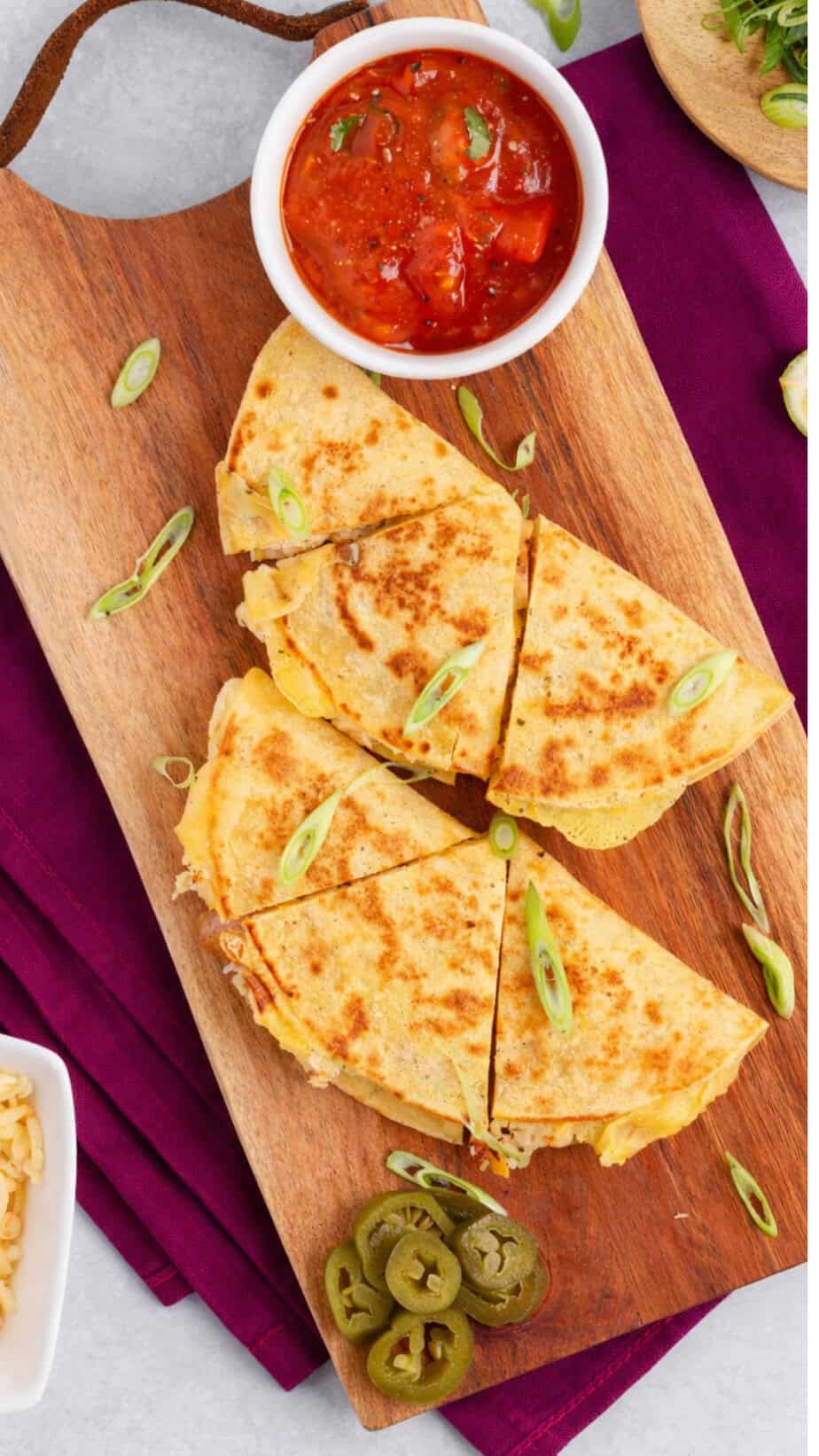
This chicken sausage breakfast quesadilla is one of those meals I like because it gives you a better mix of protein, fat, and carbohydrates in a format that feels easy, comforting, and realistic.
When I talk with people about diabetes management, breakfast comes up all the time. It is often the first opportunity of the day to build a meal that supports steadier energy, helps with fullness, and makes blood sugar responses feel a little more predictable.
This quesadilla works well because it includes protein from egg, egg whites, cottage cheese, chicken sausage, and cheddar, plus fat from the cheese and egg.
And yes, it still includes carbohydrates from the tortilla, which is completely fine. Carbohydrates are not the villain in this story. The goal is to build a breakfast that feels more balanced, more satisfying, and easier to work with in real life.
Why breakfast can be helpful in diabetes management
I think breakfast can be one of the most effective meals to focus on when you are trying to feel more confident with diabetes. That is because the first meal of the day can shape your hunger, energy, and decision-making for the rest of the morning.
A breakfast with a better balance of protein, fat, and carbohydrates may help you:
- Feel fuller for longer
- Reduce the urge to snack constantly an hour later
- Support steadier energy through the morning
- Build meals that are easier to dose for or learn from
- Start the day with something satisfying instead of chaotic
For some people, meals built around mostly refined carbs can leave them hungry again pretty quickly.
Adding protein and fat can slow things down a bit and give the meal more staying power. Your blood sugar response will still be personal, because diabetes loves to be dramatic, but this kind of meal gives you a strong foundation.
Why this quesadilla works
This recipe is simple, but it is doing a lot of good work.
Chicken sausage adds leaner protein
Chicken sausage can be a leaner protein option than some traditional pork sausages, depending on the brand you choose.
It still gives you savory flavor and that breakfast sausage feel, but often with less saturated fat. That can make it a helpful option when you want protein that fits nicely into a balanced breakfast without making the meal feel too heavy.
It is also convenient, which matters. If a meal is technically healthy but too annoying to make on a weekday, it becomes a fantasy breakfast. This one stays in the realm of actual life.
Eggs, egg whites, and cottage cheese build the protein
Using a whole egg along with egg whites gives you a nice mix of flavor and added protein. Cottage cheese makes the filling creamy and boosts the protein even more. It is one of those ingredients that quietly pulls a lot of weight in a recipe.
Cheese and protein help with fullness
Cheddar adds flavor, richness, and fat, which can help the meal feel more satisfying. When you pair that with the protein in the filling, you get a breakfast that is more likely to keep you full than something carb-only.
The tortilla keeps it practical
The tortilla gives this recipe structure, texture, and the carbohydrate portion of the meal. It makes the breakfast feel complete, not like a sad scrambled egg situation folded into disappointment.
Can you use a low-carb tortilla?
Yes, absolutely. A low-carb tortilla is a fine option here if you want to reduce the carbohydrate content further.
That can be especially helpful if you know you personally do better with a lower-carb breakfast, or if you are trying to make the meal fit a certain blood sugar goal. Many low-carb tortillas also add fiber, which may further change how filling the meal feels.
Just keep in mind that swapping ingredients changes the nutrition. If you use a different tortilla, a different sausage, more cheese, less cheese, or extra add-ins, the macronutrient breakdown will shift.
That is not a bad thing. It is just something to be aware of, especially if you count carbs, match insulin to meals, or like to keep an eye on how meals affect your blood sugar.
Easy ways to customize it
One of the best parts of a breakfast quesadilla is that it is flexible. You can adjust it based on your taste, what is in your fridge, or what your body needs that day.
Here are a few easy swaps and add-ins:
- Add sautéed spinach, peppers, or onions
- Use pepper jack or mozzarella instead of cheddar
- Swap chicken sausage for turkey sausage, mashed beans or tofu crumbles
- Use a low-carb tortilla if you want fewer carbs
- Add jalapeños for heat
- Serve with salsa, guacamole, or lime wedges
A few nutritionist notes
When I build breakfasts for diabetes support, I am usually looking for three things: satisfaction, simplicity, and balance.
It is satisfying because it includes enough protein and fat to help with fullness. It is simple because it does not ask you to become a brunch chef before 9 a.m. And it is balanced because it includes carbohydrates intentionally to support the rest of the meal.
I also encourage you to observe the following as you’re cooking, for the best result:
Recipe notes
- Use a nonstick skillet for best results. This helps the egg mixture cook gently and keeps the quesadilla from sticking while the tortilla crisps.
- Do not overfill the quesadilla. It is tempting, because cheese makes people bold, but too much filling can make it harder to fold and flip neatly. If your tortilla isn’t big enough for the filling, the extra filling can be eaten separately.
- Brown and cook the chicken sausage first. A little color adds more flavor and helps keep the filling from tasting flat.
- Whisk the cottage cheese well into the eggs. This helps it melt more smoothly into the filling and keeps the texture creamy rather than chunky.
- Cook the eggs until just set. They will continue cooking a bit inside the quesadilla, so pulling them off the heat early helps avoid dry eggs.
- Shred your own cheese if you can. Pre-shredded cheese works, but doesn’t often melt properly because of non-sticking agents. Freshly grated cheese usually melts better and gives you a smoother filling.
- Lower-carb tortillas work well here. They are a good option if you want to reduce the carbohydrate content, but the final macros may change depending on the brand you use.
- Ingredient swaps are easy. You can add spinach, peppers, onions, or jalapeños, or swap the chicken sausage for turkey sausage or another protein you enjoy. Just keep in mind that any changes will affect the macronutrient breakdown.
- Keep the heat moderate. If the pan is too hot, the tortilla can brown too quickly before the cheese melts and the filling warms through.
- Serve with toppings that add flavor without much effort. Salsa, sliced green onions, lime wedges, and a little guacamole all work well here.
- This is best eaten fresh. The tortilla is crispest right after cooking, though you can still reheat leftovers in a skillet or air fryer for better texture than the microwave.
- Track your own response. If you are eating this as part of your diabetes routine, notice how the combination of protein, fat, and carbs works for your energy, fullness, and blood sugar. That kind of information is gold.
If you want, I can also turn these into a shorter “Tips” section formatted specifically for a recipe card plugin.
Print
Diabetes-Friendly Chicken Sausage Breakfast Quesadilla
- Total Time: 20 minutes
- Yield: 1 Quesadilla 1x
- Diet: Diabetes-Friendly, Diabetic
Ingredients
- 1.25 oz. (35 g) cooked chicken sausage, chopped
- 1 large egg
- 2 tbsp. egg whites
- 45g cottage cheese
- 2 tbsp. green onion, sliced
- Salt and pepper, to taste
- 1 oz. (30 g) cheddar cheese, grate
- 1 large tortilla
- 1/4 tsp. oil spray or oil for the skillet
 Get Recipe Ingredients
Instructions
- Cook the chicken sausage in a dry non-stick skillet over medium heat until browned and cooked through. Set aside.
- In a bowl, whisk together the egg, egg whites, cottage cheese, and green onions. Season with salt and pepper.
- Spray the skillet with 1/4 teaspoon oil and cook the egg mixture, folding gently, for 2 to 3 minutes until set. Remove from heat.
- Heat the tortilla in a separate pan. Spread half the cheese over one half of the tortilla.
- Add the egg mixture and chicken sausage, then top with the remaining cheese.
- Cook for 2 to 3 minutes until the bottom is crisp.
- Fold the tortilla in half, flip, and cook until the cheese is melted.
- Slice into thirds and serve with your favorite toppings.


Notes
- Use a nonstick skillet for best results. This helps the egg mixture cook gently and keeps the quesadilla from sticking while the tortilla crisps.
- Do not overfill the quesadilla. It is tempting, because cheese makes people bold, but too much filling can make it harder to fold and flip neatly.
- Brown the chicken sausage first. A little color adds more flavor and helps keep the filling from tasting flat.
- Whisk the cottage cheese well into the eggs. This helps it melt more smoothly into the filling and keeps the texture creamy rather than chunky.
- Cook the eggs until just set. They will continue cooking a bit inside the quesadilla, so pulling them off the heat early helps avoid dry eggs.
- Shred your own cheese if you can. Pre-shredded cheese works, but freshly grated cheese usually melts better and gives you a smoother filling.
- Lower-carb tortillas work well here. They are a good option if you want to reduce the carbohydrate content, but the final macros may change depending on the brand you use.
- Ingredient swaps are easy. You can add spinach, peppers, onions, or jalapeños, or swap the chicken sausage for turkey sausage or another protein you enjoy. Just keep in mind that any changes will affect the macronutrient breakdown.
- Keep the heat moderate. If the pan is too hot, the tortilla can brown too quickly before the cheese melts and the filling warms through.
- Serve with toppings that add flavor without much effort. Salsa, sliced green onions, lime wedges, and a little guacamole all work well here.
- This is best eaten fresh. The tortilla is crispest right after cooking, though you can still reheat leftovers in a skillet or air fryer for better texture than the microwave.
- Track your own response. If you are eating this as part of your diabetes routine, notice how the combination of protein, fat, and carbs works for your energy, fullness, and blood sugar. That kind of information is gold.
- Prep Time: 10 minutes
- Cook Time: 10 minutes
- Category: Breakfast
- Method: Stove, Stovetop
- Cuisine: Mexican
Nutrition
- Serving Size: 1 Quesadilla
- Calories: 382
- Sugar: 3.3 g
- Sodium: 545.5 mg
- Fat: 18.6 g
- Saturated Fat: 8.3 g
- Carbohydrates: 17.2 g
- Fiber: 2 g
- Protein: 35.3 g
- Cholesterol: 246 mg
Final thoughts
This chicken sausage breakfast quesadilla is a great option when you want something warm, high in protein, and easy to customize. A
And if you want to tweak the ingredients to fit your preferences, go for it. Just remember that any changes may affect the macros, which can matter if you are tracking carbohydrates or learning how certain meals affect your body.
That kind of awareness is not about food fear. It is about having more information so you can make choices with confidence.
Want help noticing how meals like this affect your energy, fullness, and blood sugar? Use the Diabetes Food Journal to track your meals, reflect on patterns, and build more confidence with food one entry at a time.