
As a public health nutritionist, board-certified health and wellness coach, and someone who works closely with people navigating diabetes every day, I get asked about weight-loss medications often.
One of the most common questions I hear is whether Wegovy is for diabetes—and if it’s not, why it’s so frequently discussed alongside diabetes medications.
The answer is nuanced. Wegovy as a brand is not FDA-approved to treat diabetes, but it’s closely related to medications that are.
Understanding what Wegovy does, how it works in the body, and where it fits (and doesn’t fit) in diabetes care helps take the mystery—and some of the pressure—out of the conversation.
Wegovy and Diabetes Dosage Guidelines
Wegovy is a prescription medication approved by the U.S. Food and Drug Administration for chronic weight management in adults with obesity, or adults who are overweight and have at least one weight-related condition such as high blood pressure or high cholesterol.¹
Wegovy contains semaglutide, the same active ingredient found in Ozempic, a medication approved for the treatment of type 2 diabetes.²
The difference between Wegovy and Ozempic isn’t the drug itself—it’s the dosage, indication, and prescribing guidelines.²
Because semaglutide affects appetite regulation, digestion, and insulin-related pathways, Wegovy often shows up in diabetes conversations even though it is not prescribed specifically to treat diabetes.
How Wegovy Works for Diabetes Management
Wegovy belongs to a class of medications known as GLP-1 receptor agonists.
GLP-1 (glucagon-like peptide-1) is a hormone the body naturally produces that plays a role in appetite control, gastric emptying, insulin secretion, and glucagon regulation.³
GLP-1 receptor agonists are commonly used in type 2 diabetes care because they help improve blood sugar control by increasing insulin release in response to meals and reducing excess glucose production by the liver.⁴ Although Wegovy is prescribed for weight management, it activates these same biological pathways.
What’s Happening in Your Body When You Take Wegovy
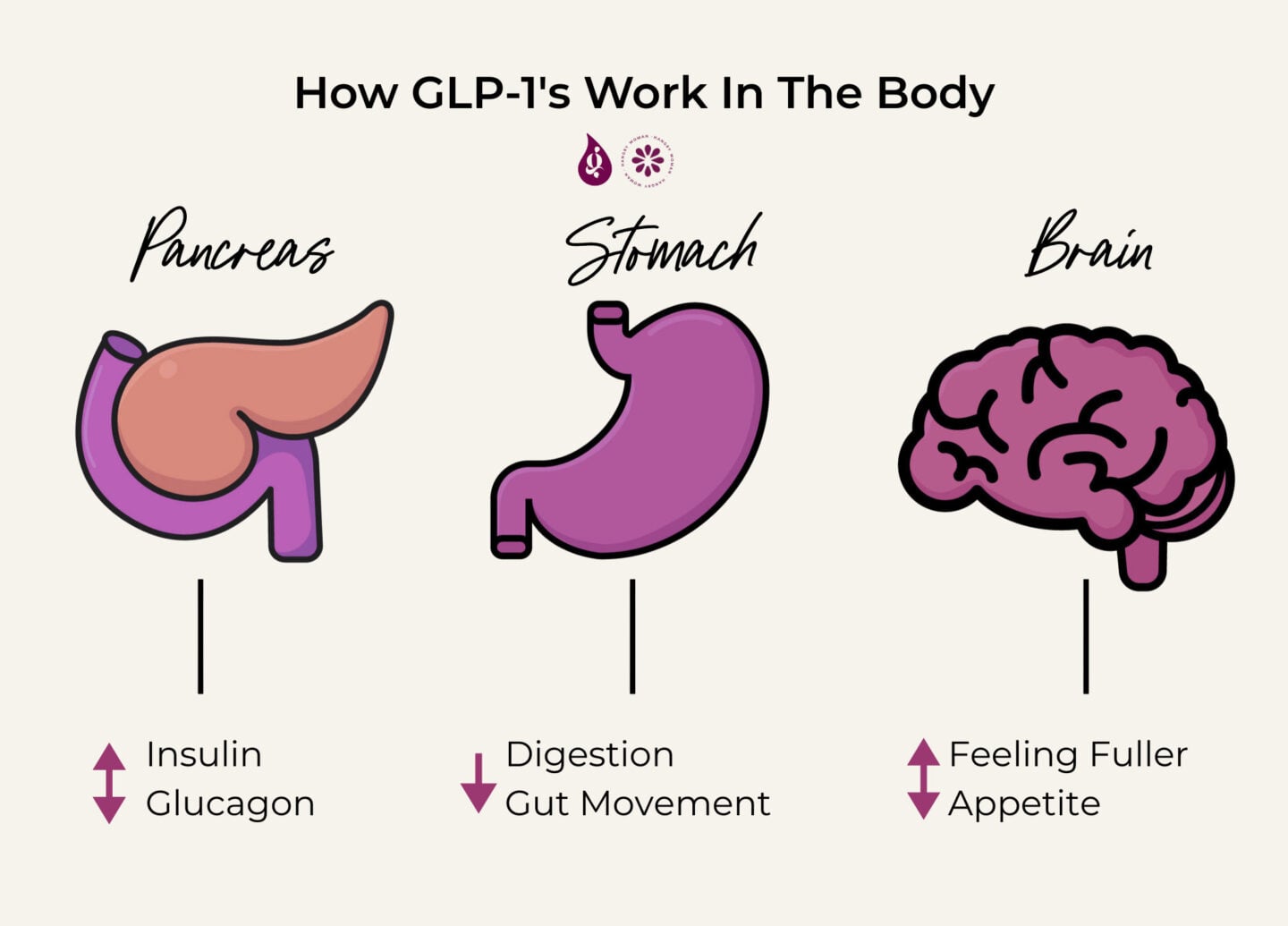
Wegovy works by mimicking the action of GLP-1 in the body, leading to several effects that are relevant to metabolic and blood sugar health.
It slows gastric emptying, which means food moves more slowly from the stomach into the intestines, helping reduce sharp post-meal blood sugar spikes.³
Wegovy also increases feelings of fullness and reduces appetite by acting on appetite-regulating centers in the brain.³
It enhances glucose-dependent insulin secretion while suppressing inappropriate glucagon release, improving overall glucose stability.⁴
These mechanisms explain why semaglutide-based medications have been shown to lower A1C levels in people with type 2 diabetes, even when weight loss is not the primary treatment goal.⁵
Benefits for Diabetic and Prediabetic Patients
Although Wegovy is not approved as a type 2 diabetes treatment, some people with insulin resistance or prediabetes may experience improvements in metabolic markers while using it under medical supervision.
Clinical trials have shown that semaglutide can lead to improved insulin sensitivity, reduced fasting glucose levels, and lower A1C in people with type 2 diabetes.⁵
These effects are part of why GLP-1 receptor agonists are recommended by diabetes care guidelines as effective glucose-lowering therapies.⁴
Some individuals may also see improvements in cardiovascular risk factors, including blood pressure and cholesterol, which is particularly relevant given the increased cardiovascular risk associated with diabetes.⁶
That said, benefits vary widely, and medication response is highly individual.
Potential Risks and Considerations
Wegovy is not appropriate for everyone, especially for people managing diabetes with insulin or medications that can cause low blood sugar.
When combined with insulin or sulfonylureas like Glipizide, Glyburide, or Glimepiride, GLP-1 medications may increase the risk of low blood sugar unless other medications are carefully adjusted.⁴
Common side effects include nausea, vomiting, diarrhea, constipation, and appetite suppression, particularly during dose escalation.¹
These side effects can make it difficult for some people to meet their nutrition needs consistently.
Wegovy is not recommended in individuals with a personal or family history of medullary thyroid carcinoma or multiple endocrine neoplasia syndrome type 2 (MEN 2).¹
It’s also important to understand that stopping Wegovy without a long-term plan often leads to weight regain, which has been documented in clinical trials.⁷
Medication should always be considered within the context of sustainable care, not as a short-term fix.
Should I Ask My Doctor About Wegovy? A Practical Checklist
I always tell people this: asking your doctor about a medication isn’t a commitment—it’s a conversation. This checklist is meant to help you decide whether Wegovy is worth discussing, not whether it’s the “right” or “wrong” choice.
You might want to ask your doctor about Wegovy if:
- You’ve been diagnosed with obesity or are considered overweight and have a weight-related condition like high blood pressure, high cholesterol, insulin resistance, or prediabetes.
- You’ve noticed that appetite regulation feels genuinely difficult—meaning hunger cues don’t match your energy needs, even when meals are balanced and consistent.
- You’ve tried nutrition, movement, and habit changes and still feel like your body is working against you rather than with you.
- You’re managing type 2 diabetes or prediabetes and are curious whether a GLP-1 medication could support blood sugar stability alongside your current care plan.
- You want help reducing cardiometabolic risk factors—not just focusing on weight alone.
Pause and talk through it carefully if:
You use insulin or medications that can cause low blood sugar and don’t currently have frequent medical follow-up.
You’ve had digestion issues in the past and worry about nausea, throwing up, or difficulty meeting nutrition needs.
You’ve experienced disordered eating, chronic under-eating, or food anxiety in the past and are concerned about appetite suppression.
You’re looking for a short-term solution without a long-term plan for nutrition, movement, and support after stopping the medication.
You feel pressured—by social media, friends, or headlines—to pursue medication rather than genuinely curious.
Bring these questions to your appointment:
“How might this medication affect my blood sugar or insulin needs?”
“What side effects should I realistically expect, and how are they managed?”
“How will we monitor my nutrition intake and overall health—not just weight?”
“What happens if I stop taking it later?”
“How does this fit with my long-term diabetes or metabolic care plan?”
A reminder I always share with clients
Needing support—whether that’s medication, coaching, or both—is not a failure of discipline or willpower. Bodies are complex. Metabolism is adaptive. And care should be collaborative, not corrective.
Wegovy isn’t a requirement, a shortcut, or a badge of success. It’s one possible tool. The goal isn’t shrinking yourself—it’s building a body and a care plan that feel more livable.
If you decide to ask, you’re not “giving up.” You’re gathering information. And that’s a strong place to start.
Conclusion
Wegovy is not a diabetes medication—but it operates in the same metabolic landscape as many diabetes treatments. GLP-1s affect appetite regulation, digestion, and insulin signaling
That explains why it frequently enters diabetes conversations, even though it is approved for weight management.
What matters most isn’t whether Wegovy is “for” diabetes, but whether it fits safely and appropriately into someone’s overall health plan.
Medications are tools—not moral judgments—and informed, individualized care should always guide their use.
References
- U.S. Food and Drug Administration. Wegovy (semaglutide) injection prescribing information.
- U.S. Food and Drug Administration. Ozempic (semaglutide) injection prescribing information.
- Baggio LL, Drucker DJ. Biology of incretins: GLP-1 and GIP. Gastroenterology.
- American Diabetes Association. 2026 Standards of Medical Care in Diabetes.
- Marso SP et al. Semaglutide and cardiovascular outcomes in patients with type 2 diabetes. New England Journal of Medicine.
- Wilding JPH et al. Once-weekly semaglutide in adults with overweight or obesity. New England Journal of Medicine.
- Rubino D et al. Weight regain after withdrawal of semaglutide treatment. Diabetes, Obesity and Metabolism.