
This content contains affiliate links, which helps hangrywoman.com to provide free recipes and resources. Thank you for your support of my blog and non-profit organization, Glucose Guide.
This Week’s Diabetes-Friendly Meal Plan: How I Build Meals for Steadier Blood Sugars
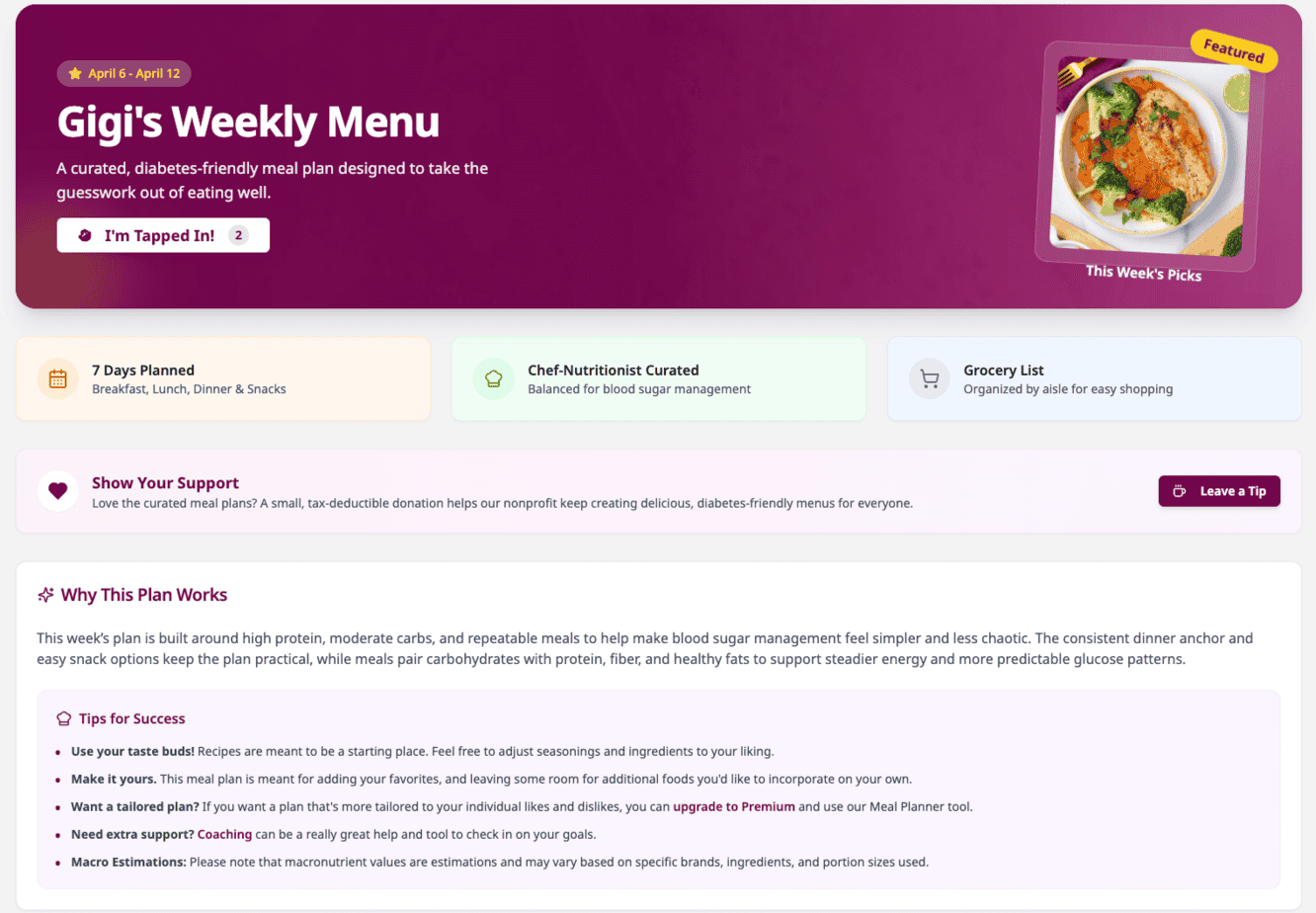
When I build a weekly meal plan, I’m not chasing perfection. I’m chasing predictability.
As a health and wellness coach, a public health nutritionist, and someone living with diabetes, I’ve learned that blood sugar management gets harder when food feels chaotic.
This week’s plan is designed to lower that noise and make meals feel steady, repeatable, and realistic.
As always, I think of these meal plans as a starting place for you.
You can follow it step by step, or you can pick and choose which things work for you, and which things you want to leave behind. It’s flexible when you need it, and structured if you need that too.
The Goal for This Week
My goal with this plan is simple: support steadier blood sugar patterns while keeping meals practical.
I prioritize protein and fiber at every meal, keep carbohydrates consistent and intentional, and avoid extremes that are hard to sustain.
Carbs aren’t eliminated or feared here—they’re used on purpose and paired thoughtfully.
How I Structured the Meals
Breakfast: Protein First
I start the day with protein-forward breakfasts like smoothies with seeds, eggs with vegetables, chia pudding, or almond flour pancakes. If I can have something savory, I like to go that route.
A savory breakfast for me gives me some steadiness throughout the day.
Beginning the day with protein helps slow digestion, reduce early glucose spikes, and keep energy more stable through the morning.
Lunch: Build the Plate, Don’t Overthink It
Lunches are built around a solid protein—chicken, shrimp, tofu, turkey, or salmon—paired with vegetables and healthy fats.
These meals are filling without being heavy and work well for leftovers, which makes weekday lunches far less stressful.
Dinner: Simple, Lower-Carb Comfort
Dinners lean on familiar foods prepared simply. Zucchini noodles, cauliflower rice, roasted vegetables, and straightforward proteins keep evenings lighter while still satisfying.
This approach can be especially helpful for people who notice higher blood sugars later in the day.
Snacks: Intentional, Not Reactive
Snacks are included on purpose, not as an afterthought. Nuts, vegetables with dips, and seed butters help bridge meals without causing sharp glucose swings or setting off a cycle of grazing.
What the Weekly Numbers Tell Me
What matters most to me isn’t hitting exact numbers with food every single day —it’s the consistency. When meals are structured similarly day to day, blood sugar patterns often become easier to understand and manage.
But again, if you need more, add more. Our weekly diabetes meal plans are built with flexibility in mind. There’s just no way that I can please or accommodate everyone with our meal plans. But, I can create some inspiration to start with.
And you can use
Flexibility Is Built In
Proteins are interchangeable here. Chicken can become tofu.
Shrimp can become salmon. Beef can become turkey. The structure stays the same, which is what supports steadier blood sugars—not rigid food rules.
If a meal doesn’t go as planned, that’s not a failure. It’s information you can use moving forward.
Who This Plan Tends to Work Well For
This plan is a good fit for people who feel best with higher protein, lower-carb meals and who want clear structure without feeling restricted.
It may not be the right approach for everyone, and that’s okay. Nutrition should adapt to your body, your preferences, and your life—not the other way around.
Why I Like This Plan
What I like most about this week’s meal plan is how calm it feels.
Calm meals often lead to calmer blood sugars. Calmer blood sugars make diabetes management feel less exhausting. That’s always the outcome I’m aiming for.
If you want help tracking how meals like these affect your blood sugar over time, I recommend using a food and glucose journal so you can spot patterns without judgment.
The Diabetes Food Journal at https://heygigi.app is designed to help you do exactly that—log meals, connect the dots, and build confidence with food choices.
Food doesn’t need to be dramatic to be effective. Sometimes the most supportive diabetes meal plans are the quiet, steady ones you can return to week after week.