This content contains affiliate links, which helps hangrywoman.com to provide free recipes and resources. Thank you for your support of my blog and non-profit organization, Glucose Guide.
Lasagna is one of those meals people often assume is “off limits” if they’re managing diabetes.
It’s layered, carb-forward, and traditionally built around a full box of pasta.
But here’s the thing I’ve learned as a nutrition professional and someone living with diabetes: it’s rarely the food itself that’s the problem—it’s the proportions.
This stovetop lasagna keeps everything people love about the dish—rich sauce, melty cheese, and savory protein—while dialing back the parts that tend to spike blood sugar. The result is a cozy, satisfying meal that works with blood sugar management, not against it.
Why This Lasagna Works Well for Diabetes
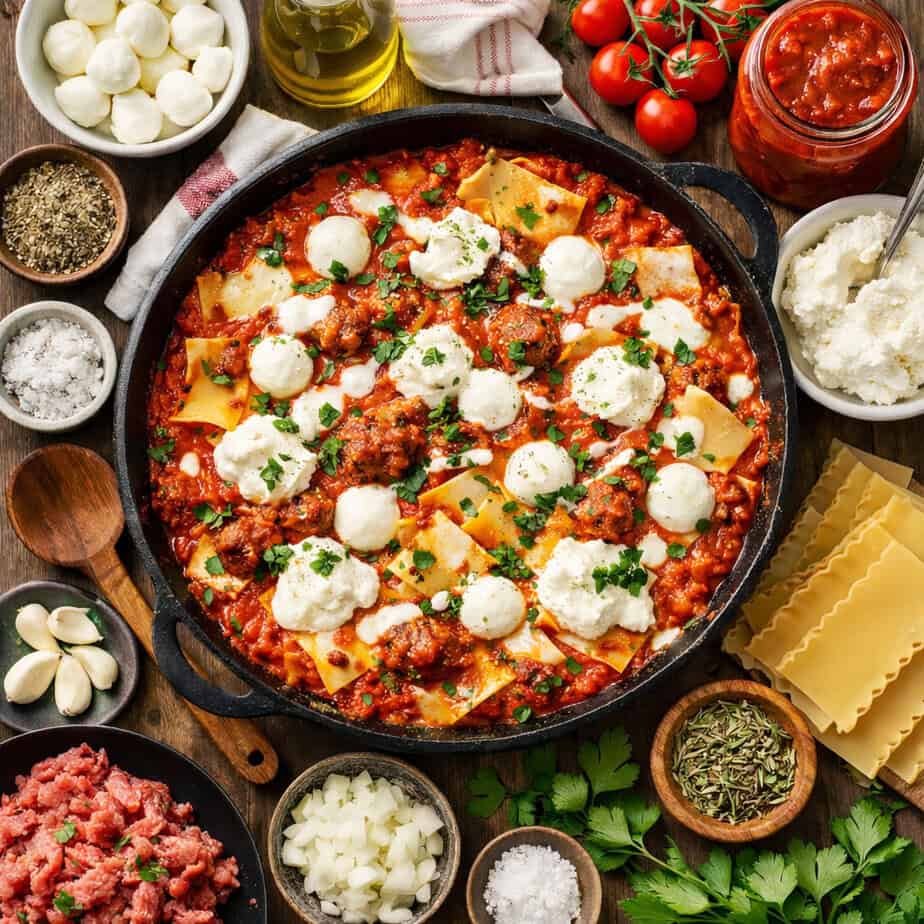
The biggest difference between this recipe and a traditional lasagna is pasta quantity.
Classic lasagna recipes often use 9–12 sheets of noodles layered throughout the dish.
This stovetop version uses just four sheets total, broken into pieces and distributed evenly through the sauce. That simple change significantly lowers the total carbohydrate load per serving while preserving the texture and experience of eating lasagna.
Instead of relying on pasta as the main structure, this recipe leans into:
- Protein from ground beef, which helps slow digestion and supports steadier blood sugar
- Fats from cheese and olive oil, which add satiety and help blunt post-meal glucose spikes
- Tomato-based sauce, which provides flavor, antioxidants like lycopene, and a small amount of fiber
You’re not removing carbs—you’re right-sizing them, which is often a more realistic and sustainable approach for people with diabetes.
The Nutritional Benefits of Lasagna (Yes, Really)

Lasagna gets a bad reputation, but nutritionally speaking, it has a lot going for it when built thoughtfully.
Protein from meat and dairy supports muscle health and helps meals feel satisfying longer.
Dairy ingredients like ricotta and mozzarella provide calcium and help fat-soluble vitamins get absorbed into the body.
Tomato sauce contributes antioxidants, including lycopene, which has been linked to heart health—an important consideration for people with diabetes.
The challenge with traditional lasagna isn’t the ingredients themselves; it’s that the balance tends to tip heavily toward refined carbohydrates.
By shifting the ratio toward protein, fat, and sauce—and away from excess pasta—you keep the nutritional benefits while reducing the blood sugar impact.
How This Recipe Scales Down a Traditional Lasagna
This stovetop lasagna is a great example of scaling down without sacrificing satisfaction.
Instead of layering noodles edge-to-edge, the pasta is broken into large pieces and cooked directly in the sauce.
Each bite still includes noodle, but it’s no longer the dominant component. Cooking everything in one pan also allows the starch from the pasta to thicken the sauce naturally, so you get richness without needing extra ingredients.
Because the dish is made on the stovetop, it’s faster, easier to portion, and more adaptable.
Want more protein? Add it. Need a slightly smaller carb portion? Serve it with a vegetable side instead of garlic bread. This flexibility matters for people managing blood sugar day-to-day.
Comfort Food That Fits Real Life With Diabetes
Living with diabetes doesn’t mean giving up comfort food. It means learning how to build meals that feel good and support your health goals.
This stovetop lasagna proves that you don’t need extreme substitutions or carb elimination to enjoy familiar favorites. Sometimes all it takes is fewer noodles, better balance, and a willingness to rethink tradition just enough to make it work for real life.
If you’re looking for a lasagna recipe that’s cozy, satisfying, and more blood-sugar-friendly, this one earns a spot in regular rotation.
Print
Diabetes-Friendly Stovetop Lasagna
- Total Time: 45 minutes
- Yield: 4 servings 1x
- Diet: Diabetic
Description
This is a lower-carb take on classic lasagna—not because carbs are bad, but because portioning matters. Instead of a full box of noodles, this recipe uses just 4 sheets, broken up and layered into the sauce so you still get that lasagna vibe without the carb overload.
Ingredients
Olive oil – 1 Tbsp | 15 ml
Wagyu ground beef – 1 lb | 454 g
Salt – 2 tsp | ~10 g
Italian seasoning – 2 tsp | ~4 g
Garlic powder – 2 tsp | ~6 g
Dried rosemary – 1 tsp | ~1 g
White onion, finely chopped – 1/4 medium | ~40 g
Garlic, minced – 5 cloves | ~15 g
Red sauce – 24 oz | 680 g
Ricotta – 1/2 cup | ~120 g
Fresh whole-milk mozzarella ciliegine – 5-6 balls | ~110 g, torn
Lasagna noodles – 4 sheets | ~55-60 g dry
Chopped parsley, for garnish
Optional: crema or cream drizzle
Instructions
-
Heat a large, deep skillet over medium heat. Add olive oil.
-
Add ground beef, salt, Italian seasoning, garlic powder, and rosemary. Cook until browned, breaking it up as it cooks.
-
Add onion and garlic. Cook 2–3 minutes until soft and fragrant.
-
Stir in red sauce and bring to a gentle simmer.
-
Break lasagna noodles into large pieces and press them into the sauce so they’re mostly submerged.
-
Cover and simmer 12–15 minutes, stirring occasionally, until noodles are tender. Add a splash of water if needed.
-
Spoon ricotta over the top in dollops, then add torn mozzarella.
-
Cover and cook 2–3 minutes until the cheese melts.
-
Finish with parsley and an optional drizzle of crema.

Equipment
 Buy Now →
 Notes
- This recipe freezes very well. Make a portion, and then divide the rest for some easy, reheatable meals later on.
- This recipe uses a jarred pasta sauce, so your macros may vary. Check the label to ensure your pasta sauce works for you. I used the Rao’s brand in this recipe.
- Serve with a side salad, or roasted vegetables even more balance.
- Prep Time: 15 minutes
- Cook Time: 30 minutes
- Category: Dinner
- Method: Stovetop
- Cuisine: Italian
Nutrition
- Serving Size: 1/4 Pan
- Calories: 415
- Sugar: 7.7 g
- Sodium: 1552 mg
- Fat: 21 g
- Saturated Fat: 7.9 g
- Carbohydrates: 21 g
- Fiber: 3.4 g
- Protein: 35.9 g
- Cholesterol: 89.7 mg