

This content contains affiliate links, which helps hangrywoman.com to provide free recipes and resources. Thank you for your support of my blog and non-profit organization, Glucose Guide.

Every five years, the U.S. government releases a new edition of the Dietary Guidelines for Americans (DGA)—a document that quietly shapes how millions of people are told to eat.
These guidelines influence school lunches, SNAP and WIC benefits, public health campaigns, and the nutrition advice many of us hear in doctor’s offices.
The 2025–2030 Dietary Guidelines mark a noticeable shift in tone and priorities. There’s a renewed emphasis on “real food,” higher protein intake, and reducing ultra-processed foods.
On the surface, this sounds promising. But for people living with diabetes, the real question isn’t what the guidelines say—it’s how they apply to real bodies, real blood sugars, and real lives.
Let’s talk about what the DGA is, who it’s for, where it falls short, and how people with diabetes can use it without losing clarity—or food joy.

What Are the Dietary Guidelines for Americans?
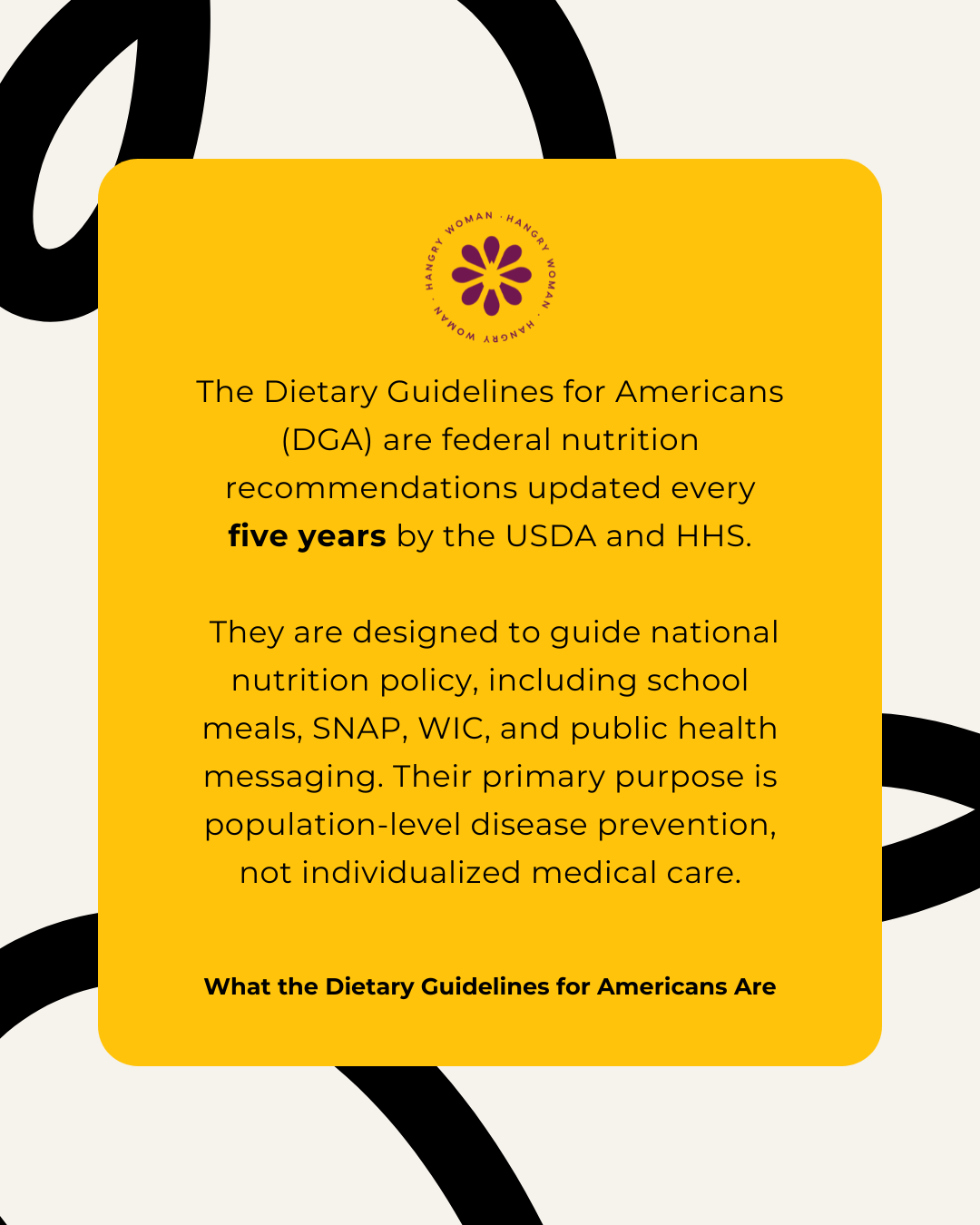
The Dietary Guidelines for Americans are federal nutrition recommendations jointly issued by the U.S. Department of Agriculture (USDA) and the Department of Health and Human Services (HHS).
Guidelines get updated every five years and are designed to guide population-level nutrition policy, not individualized medical care.
Their primary goal is disease prevention at a national scale.
That means the DGA is written to support systems—like school meals, food assistance programs, and public health initiatives. It does not address individual health conditions.
This distinction matters more than most people realize.
Who the DGA Is Actually Written For
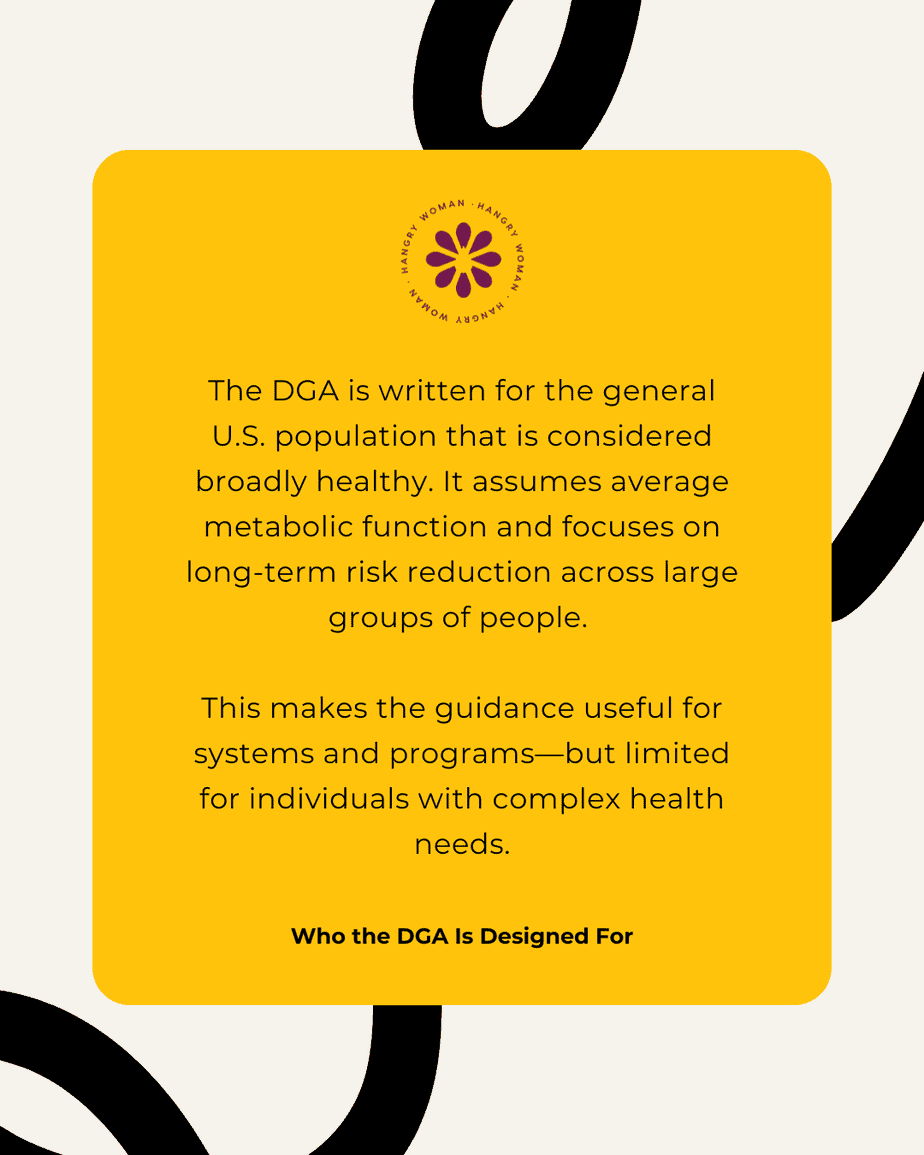
The DGA is intended for the general U.S. population that is considered broadly healthy.
It assumes average metabolic function and focuses on long-term risk reduction across large groups of people.
That makes it useful for policy and program design. But it also means the guidelines are not built to reflect the complexity of chronic conditions like diabetes, where metabolism, medication, insulin use, and blood sugar response vary widely from person to person.
Who the DGA Doesn’t Fully Represent
Because the DGA is population-based, it often struggles to fully include:
- People living with diabetes or insulin resistance
- People with disabilities or chronic illness
- Individuals with food allergies or intolerances
- Cultural food traditions outside a Western dietary framework
- People facing food insecurity or limited food access
When guidance is written for the “average” person, anyone outside that average is left to adapt it on their own.
What’s New in the 2025–2030 Guidelines

The latest guidelines represent one of the biggest philosophical shifts we’ve seen in decades. Key changes include:
- A strong emphasis on whole, minimally processed foods
- Higher protein intake recommendations
- Clearer language around reducing refined carbohydrates and added sugars
- Less focus on low-fat everything, and more focus on overall food quality
For many people with diabetes, these shifts can align better with blood sugar stability—but only when applied thoughtfully.
Protein Gets a Promotion
The 2025–2030 DGA emphasizes protein at every meal, with suggested intakes ranging from 1.2–1.6 grams per kilogram of body weight per day. Both animal and plant protein sources are encouraged.
For many people with diabetes, adequate protein can support satiety, help blunt post-meal blood sugar spikes, and make meals feel more satisfying. But higher protein needs still depend on individual health factors, kidney function, activity level, and medication use.
More protein isn’t automatically better—it’s context-dependent.
Fats: Where Things Get Complicated
The new guidelines encourage “healthy fats” and include foods like olive oil, eggs, and omega-3-rich seafood.
They also mention butter and beef tallow—while still recommending that saturated fat remain under 10% of total daily calories.
This creates internal tension within the document, especially for people with diabetes who already face an elevated risk of cardiovascular disease.
And this is where professional debate enters the conversation.
Where the Academy of Nutrition and Dietetics Has Concerns
The Academy of Nutrition and Dietetics, the largest professional organization for dietitians in the U.S., has publicly raised concerns about several aspects of the new guidelines.
Saturated Fat
The Academy notes that increased emphasis on butter, red meat, and full-fat dairy conflicts with a substantial body of evidence linking high saturated fat intake to increased cardiovascular disease risk—an especially important consideration for people with diabetes.
Dairy
The guidelines continue to center dairy as a core food group, without fully accounting for individuals who cannot or choose not to consume dairy due to intolerance, allergy, cultural patterns, or personal preference.
Low-Calorie Non-Nutritive Sweeteners
While the DGA urges moderation, the Academy points out that current evidence supports the safety of non-nutritive sweeteners within acceptable intake limits. For many people with diabetes, these sweeteners function as practical tools for reducing added sugar intake—not as health risks.
Synthetic Food Dyes
Research suggests a small subset of children may be sensitive to synthetic food dyes, but findings remain inconsistent. The Academy emphasizes that more research is needed before drawing broad conclusions about their impact.
As Academy President Deanne Brandstetter stated, some elements of the guidelines “are not aligned with the current body of evidence and will create challenges for implementation,” particularly across federal nutrition programs.
DGA vs. RDA: Not the Same Thing
One of the most common sources of confusion is mixing up the Dietary Guidelines for Americans with the Recommended Dietary Allowances (RDAs).
- The DGA focuses on overall dietary patterns
- The RDA defines minimum nutrient requirements
They serve different purposes, and confusing the two often leads to unnecessary restriction, fear, or rigid rule-following—especially in diabetes care.
Where Diabetes Fits In (Quietly)
To its credit, the DGA does acknowledge that individuals with chronic disease may need to adapt the recommendations and that lower-carbohydrate approaches may benefit some people.
That single acknowledgment matters. It confirms what many people with diabetes already know: one-size-fits-all nutrition guidance doesn’t work for everyone.
Why Individualized Care Matters
General guidelines cannot account for:
- Insulin dosing and timing
- Glucose variability
- Medication effects
- Digestive tolerance
- Lived experience with food
When nutrition advice doesn’t match how your body responds, adaptation isn’t failure—it’s responsible care.
The Role of a Registered Dietitian
This is where working with a registered dietitian or qualified nutrition professional becomes essential.
Dietitians are trained to apply population-level guidance into individualized, evidence-based care that reflects medical history, culture, access, and personal goals.
Guidelines can inform decisions—but they should never replace personalized support, self-trust, or food joy.
The Bottom Line

The Dietary Guidelines for Americans are a policy tool—not a prescription for your plate.
For people with diabetes, the most important takeaway isn’t whether you’re following the guidelines “correctly,” but whether your nutrition approach supports stable blood sugars, overall health, and a peaceful relationship with food.
Nutrition isn’t about obedience. It’s about understanding, adaptation, and care.