This content contains affiliate links, which helps hangrywoman.com to provide free recipes and resources. Thank you for your support of my blog and non-profit organization, Glucose Guide.
Frozen vegetables don’t get enough credit.
They’re often treated like a backup plan, when in reality they’re one of the most reliable tools for eating well with diabetes—especially on busy, low-energy, or “I cannot deal with another decision today” days.
Here’s the truth I see over and over as a nutritionist and chef: consistency beats perfection.
Frozen vegetables help you show up consistently without adding stress, waste, or unrealistic expectations.
They’re picked at peak ripeness, frozen quickly to lock in nutrients, and they wait patiently in your freezer until you’re ready.
No pressure. No judgment. No slimy, moldy produce drawer needed.
Vegetables You Can Buy Frozen
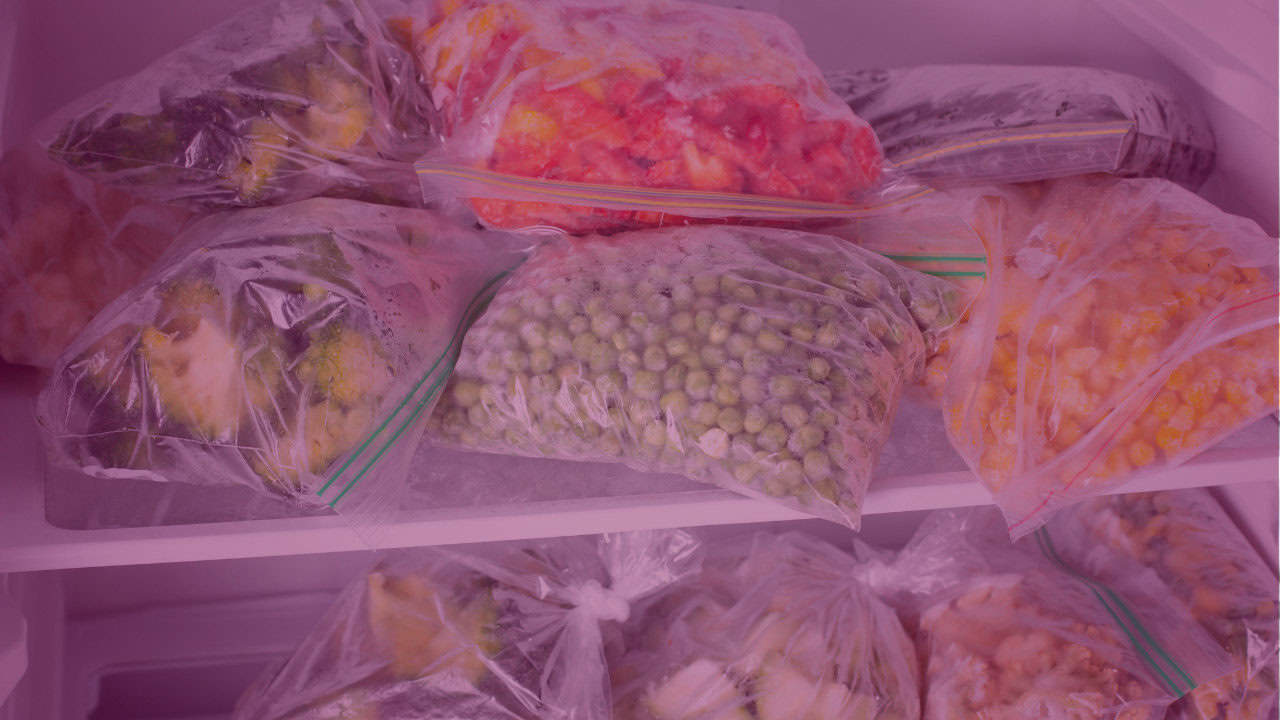
You’ll find most of these year-round at any major grocery store.
Green Vegetables
- Broccoli florets or cuts
- Spinach (chopped or whole leaf)
- Kale
- Green beans
- Brussels sprouts
- Asparagus
These are workhorse veggies.
They’re low in carbs, high in fiber, and easy to pair with protein and fat for steadier blood sugar responses.
They work in stir-fries, sheet-pan meals, soups, pasta, eggs—pretty much everything.
Orange & Yellow Vegetables
- Carrots (coins, diced, crinkle-cut)
- Corn
- Butternut squash
- Sweet potato cubes
- Yellow squash
These tend to be a little higher in natural carbohydrates, which doesn’t make them “bad.” It just means they shine when paired intentionally—with protein, fat, and fiber to slow digestion and smooth out glucose response.
Neutral & Savory Vegetables
- Cauliflower florets
- Riced cauliflower
- Mushrooms
- Onions
- Bell pepper strips or blends
- Zucchini
These are excellent for bulking up meals without dramatically changing carb load.
Riced vegetables are especially useful for people who want flexibility—half rice, half cauliflower rice is a very normal, very realistic strategy.
Protein-Containing Veggies
- Edamame (shelled or in pods)
- Pea blends
Edamame deserves special recognition. It provides plant-based protein, fiber, and carbs in one neat package, which makes it incredibly useful for bowls, salads, and quick snacks.
Southern & Specialty Picks
- Okra
- Mixed vegetable blends
- Stir-fry blends
- Fajita vegetable mixes
Frozen blends are underrated. They remove multiple prep steps at once and make it easier to actually cook instead of ordering takeout because chopping feels like too much.
Why Frozen Vegetables Work So Well for Blood Sugar Support
From a diabetes nutrition perspective, frozen vegetables solve several real-world problems:
They’re predictable. You know exactly what you’re getting nutritionally, and portions are easy to measure or eyeball.
They reduce friction. Fewer steps between “I should eat something balanced” and “I am eating something balanced” matters more than most nutrition advice acknowledges.
They reduce waste. No guilt over throwing away produce you didn’t get to in time.
They’re accessible. Frozen vegetables are often more affordable and available than fresh produce, especially for people shopping on a budget or with limited grocery access.
And importantly: they help people eat more vegetables overall. That’s the win.
What to Watch For When Buying Frozen Vegetables
Not all frozen vegetables are created equal, but the rules are simple.
Look for plain vegetables with no added sauces or seasoning blends if you want maximum flexibility. Sauced versions aren’t wrong—they’re just less adaptable and sometimes higher in added sugars or sodium.
Check the ingredient list. Ideally, it should say one thing: the vegetable.
Steam-in-bag options can be helpful, but stovetop or oven reheating often gives better texture and flavor, especially if you’re adding oil, spices, or sauces yourself.
How to Use Frozen Vegetables Without Making Them Sad
Frozen vegetables don’t need to be boring. They just need heat, fat, and seasoning.
Roast them at high heat with olive oil, salt, and pepper.
Sauté them straight from frozen in a hot pan.
Add them to soups, stews, chili, and pasta sauces.
Fold them into eggs, casseroles, grain bowls, and rice dishes.
Texture improves dramatically when you avoid overcrowding the pan and let moisture cook off instead of steaming everything into submission.
The Bottom Line
Frozen vegetables are not a shortcut—they’re a strategy.
They support blood sugar balance, reduce decision fatigue, and make balanced meals more accessible in real life. For people managing diabetes, prediabetes, or just the general chaos of adulthood, that matters more than chasing an idealized version of “fresh only” eating.
Your freezer doesn’t need to look fancy. It just needs to be functional.
And frozen vegetables do that job beautifully.