
This content contains affiliate links, which helps hangrywoman.com to provide free recipes and resources. Thank you for your support of my blog and non-profit organization, Glucose Guide.
Let’s talk about oatmeal the way it actually shows up in real life: in jars, in busy mornings, in bodies that don’t all respond the same way.
This version intentionally uses less oats and more fiber and texture, so you’re landing closer to that sweet spot: filling, enjoyable, and easier on your glucose.
Why This Version Works
Most overnight oats recipes quietly load you up with 50–70g of carbs before 9 a.m. That’s not a moral failure. More carbs + low protein/fat = higher likelihood of a spike.
So here, we rebalance.
In this recipe, I use a smaller amount of oats, and add in some buffer with protein and fiber from the chia jam and some added fiber from the blueberries.
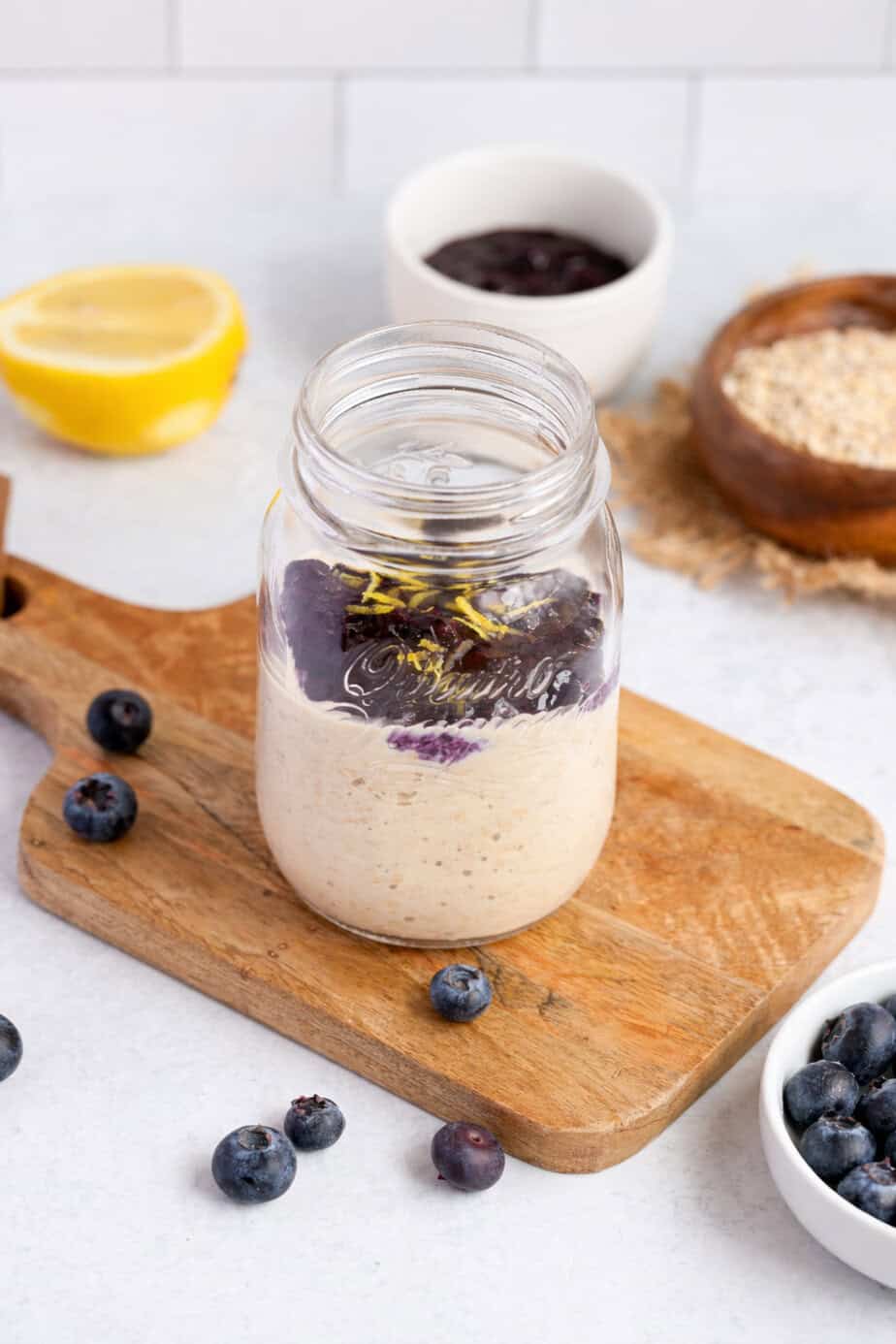
Ingredients for this overnight oats recipe
- Old-fashioned rolled oats
- Unsweetened vanilla almond milk
- Blueberry Chia Jam (from my Blueberry Chia Jam recipe)
- Lemon zest
- Fresh blueberries
- Optional add-ins (highly encouraged):
- 1–2 tablespoons Greek yogurt or cottage cheese
- 1 tablespoon nut butter or chopped nuts
- Protein powder (plain or vanilla)
This portion lands most people around 20–30g of carbs, depending on your jam and add-ins.
I also recommend looking for oats that start with a little bit more protein. There are plenty of brands that have added protein to their oats. Check the labels to determine if the balance works for you.
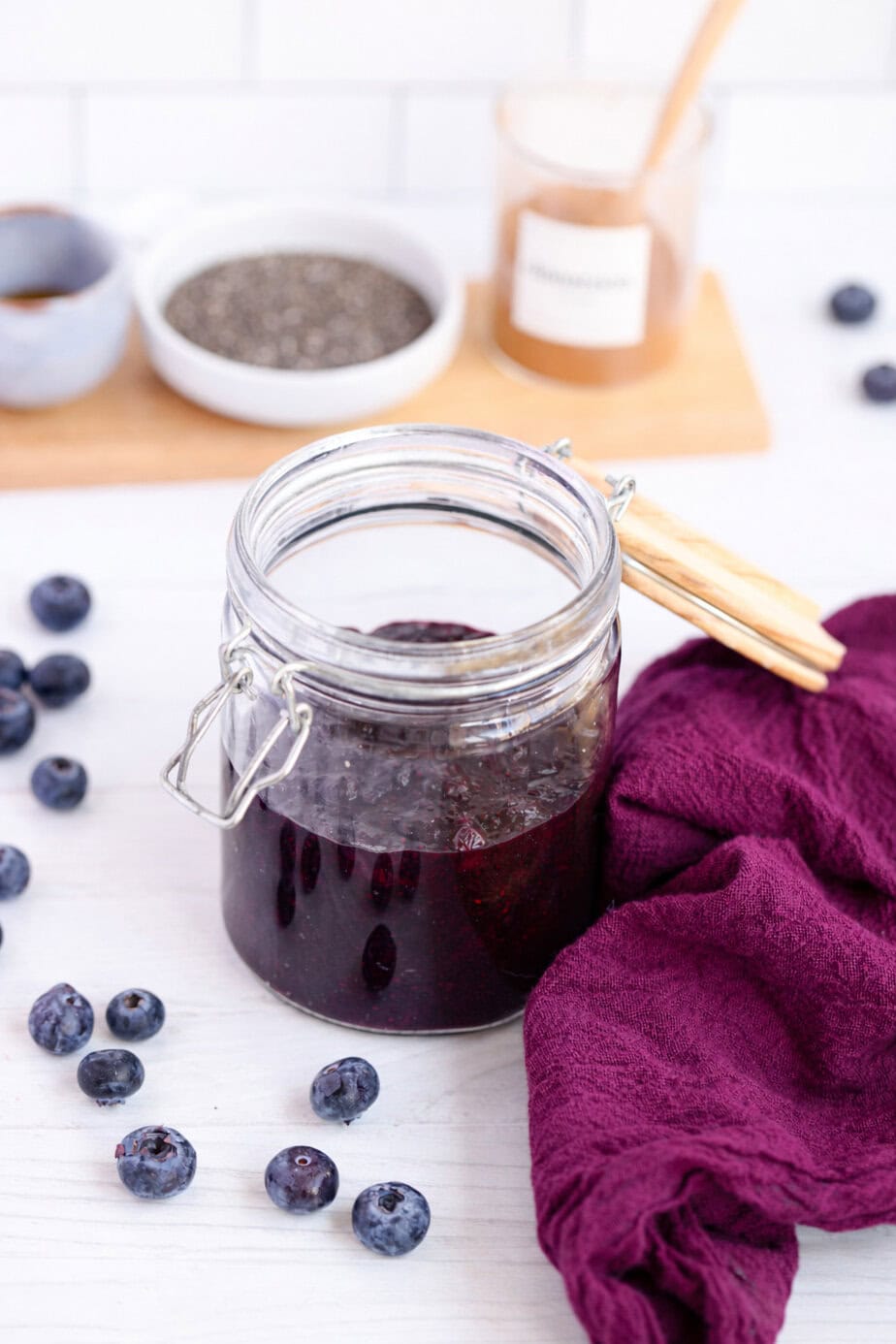
Why I Use My Blueberry Chia Jam Here
Traditional jam is preserved with high amounts of sugar, which is how it’s supposed to be.
Bacteria mold and yeast need water to grow, and high sugar environments lower the water activity. And so it means most jams are often higher sugar for preservation purposes.
My blueberry chia jam uses:
- Whole fruit
- Chia seeds (fiber + healthy fats)
- Minimal added sweetener (or none)
That combination slows digestion and softens glucose impact with less added sugar.
Can Oats Spike Your Blood Sugar?
Yes. Absolutely. Sometimes dramatically.
Here’s why:
Oats are mostly carbohydrate. Even “healthy” carbs are still carbs. When eaten alone, they digest quickly and raise blood glucose.
Common reasons people spike after oatmeal:
- Large portions
- Instant oats (less fiber = faster absorption)
- Sweetened milk
- Sugary toppings
- No protein or fat
- Eating them when insulin sensitivity is low (often mornings)
None of this means oats are “bad.” It means they need some additional pairing and support to help balance out glucose spikes.
Are Overnight Oats High in Sugar?
They can be.
Store-bought versions and many online recipes include:
- Honey
- Maple syrup
- Flavored yogurts
- Sweetened milks
- Sweetened dried fruit
That adds up fast.
This version relies mostly on:
- Fruit
- Chia jam
- Optional non-nutritive sweeteners
This particular recipe is intentional to balance out fat, fiber and protein for better blood sugar balance.
Are Overnight Oats Better Than Cooked Oats for Diabetics?
Sometimes. Not always.
- Are slightly more resistant-starch-rich
- Often digest a bit slower
- Are easier to pair with protein
Cooked oats:
- Can be just as good
- May spike faster if very soft
- Depend more on toppings
The bigger factor is what you add to them for balance, not how you prepare them.
How to Eat Oatmeal Without Raising Blood Sugar (As Much)
You won’t completely avoid a rise when you eat oatmeal. That’s biology. But you can blunt your spikes so that you stay in range for a longer time period.
Here’s the formula I teach:
Carbs + Protein + Fat + Fiber = Stability
So with oats:
- Reduce the portion
- Add yogurt, eggs, protein powder, tofu, or cottage cheese
- Add nuts or seeds
- Use berries instead of syrup
- Avoid liquid sugar
This recipe follows that model.
Why Is My Blood Sugar High After Eating Oatmeal?
Usually it’s one (or more) of these:
- Portion too large
- No protein
- Morning insulin resistance
- Highly processed oats
- Hidden sugars
- Stress, sleep, hormones, or illness
Blood sugar is never just about food. Food is one variable in a very dramatic equation.
How to Sweeten Oatmeal Without Sugar
Options that actually work:
- Berries
- Chia jam
- Cinnamon
- Vanilla extract
- Non-nutritive sweeteners (stevia, monk fruit, allulose, etc.)
- Unsweetened applesauce (small amounts)
Should People With Diabetes Eat Oatmeal Every Day?
Not necessarily.
Some people tolerate oats beautifully.
Some spike every time.
Some do fine in small portions.
Your meter, CGM, and body are better teachers than any headline.
Blood Pressure and Oatmeal
Oats contain soluble fiber (beta-glucan), which can help support heart health and modestly improve cholesterol and blood pressure over time.
But oatmeal isn’t medicine. It’s one small piece of a bigger lifestyle picture: movement, stress, sleep, meds, genetics, access to care.
What’s the Best Oatmeal for Diabetes?
Look for:
- Old-fashioned rolled oats
- Steel-cut oats (if you like them)
- No added sugar
- No flavor packets
- Oats with protein added
Avoid:
- Instant flavored packets
- “Protein” oats with added sugar
- Oats with candy-like mix-ins
Simple is better. You control the balance.
Print
Overnight Oats with Blueberry Chia Jam
- Total Time: 0 hours
- Yield: 1 serving 1x
- Diet: Diabetes-Friendly, Diabetic, Heart Healthy
Description
These blueberry chia jam overnight oats are a blood sugar–balanced take on a classic make-ahead breakfast. By using a smaller portion of oats and layering in fiber-rich chia jam, fresh berries, and optional protein, this recipe supports steadier energy and fewer glucose spikes—without sacrificing flavor or satisfaction.
Ingredients
- 0.9 oz (25g) old-fashioned rolled oats
- 1/2 cup (120 ml) unsweetened vanilla almond milk
- 2 tablespoons Blueberry Chia Jam (from my Blueberry Chia Jam recipe)
- 1/4 teaspoon lemon zest
- 1/4 cup (38g) fresh blueberries
Optional add-ins (highly encouraged):
- 1–2 tablespoons Greek yogurt or cottage cheese
- 1 tablespoon nut butter or chopped nuts
- Protein powder (plain or vanilla)
 Get Recipe Ingredients
Instructions
- Add oats to a glass jar or container.
- Pour in almond milk and stir well.
- Layer in blueberry chia jam, fresh blueberries, and lemon zest.
- Add any protein or fat add-ins if using.
- Cover and refrigerate overnight (or at least 4 hours).
Equipment
 Buy Now →
  Buy Now →
Microplane Zester & Heavy Duty Cheese Grater & Vegetable Grater
Buy Now →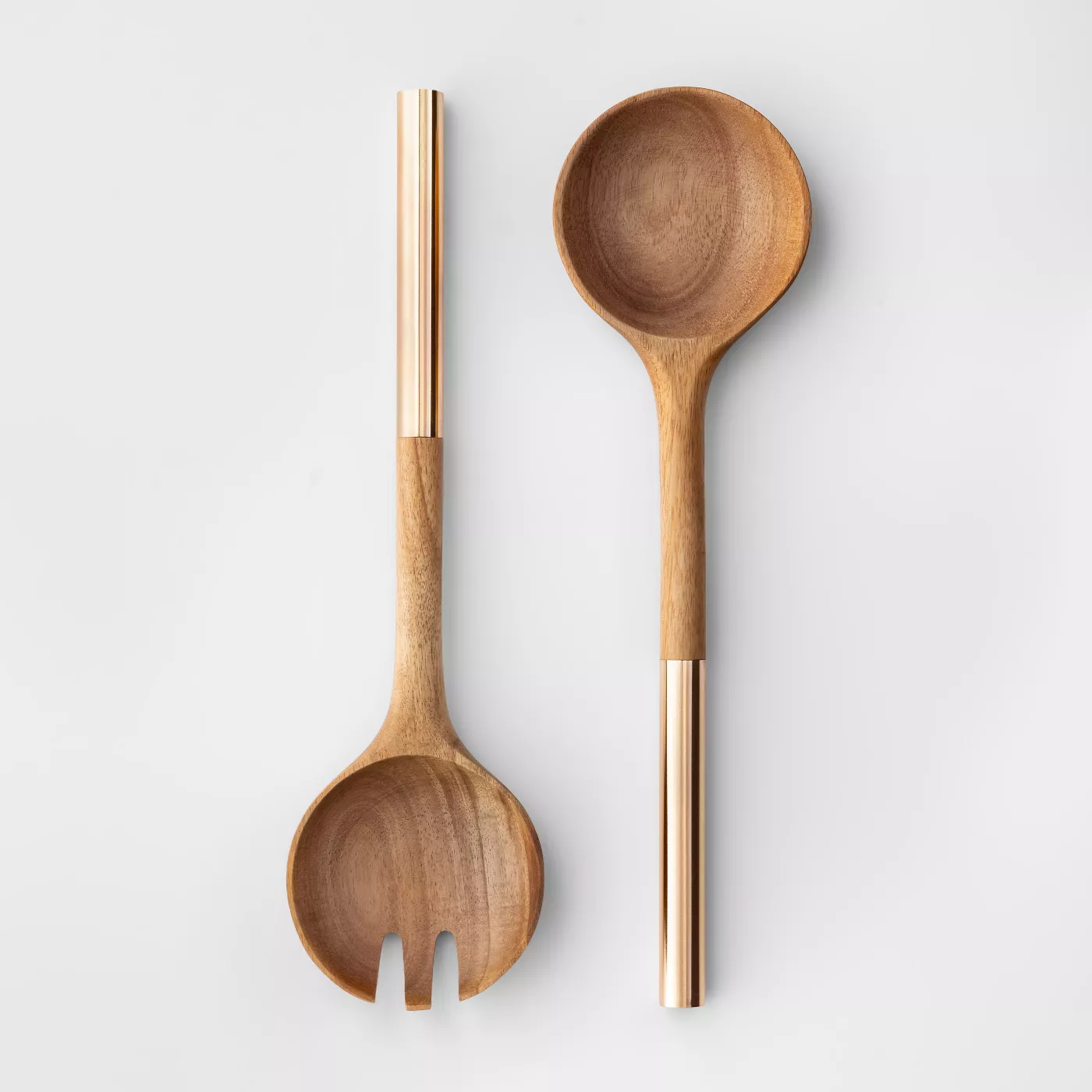 Buy Now →
 Notes
- Enjoy cold, or stir and gently warm if you prefer it heated.
- Play with portions. You can rebalance this in many different ways to make the ratios and balance work for your blood sugars.
- Prep Time: 5
- Chill Time: 1 hour to overnight
- Category: Breakfast, Make Ahead, Meal Prep
- Method: No-Cook
- Cuisine: American
Nutrition
- Serving Size: 1
- Calories: 354
- Sugar: 6.4 g
- Sodium: 274.4 mg
- Fat: 11 g
- Saturated Fat: 2.5 g
- Carbohydrates: 35.6 g
- Fiber: 4.3 g
- Protein: 25.9 g
- Cholesterol: 5.7 mg
Final Thought
When you learn how to build your bowl—balancing fat, fiber, and protein—you stop fearing breakfast and start using it as a tool.
That’s the goal. Not perfection. Not restriction. Confidence.
If you’d like, I can next help you turn this into a Glucose Guide version with macros and CGM-friendly tips built in.