
This content contains affiliate links, which helps hangrywoman.com to provide free recipes and resources. Thank you for your support of my blog and non-profit organization, Glucose Guide.
As a public health nutritionist living with LADA diabetes, I don’t build meal plans around fear. I build them around physiology.
What your body does with food. What supports steadier glucose patterns. What feels sustainable in real life.
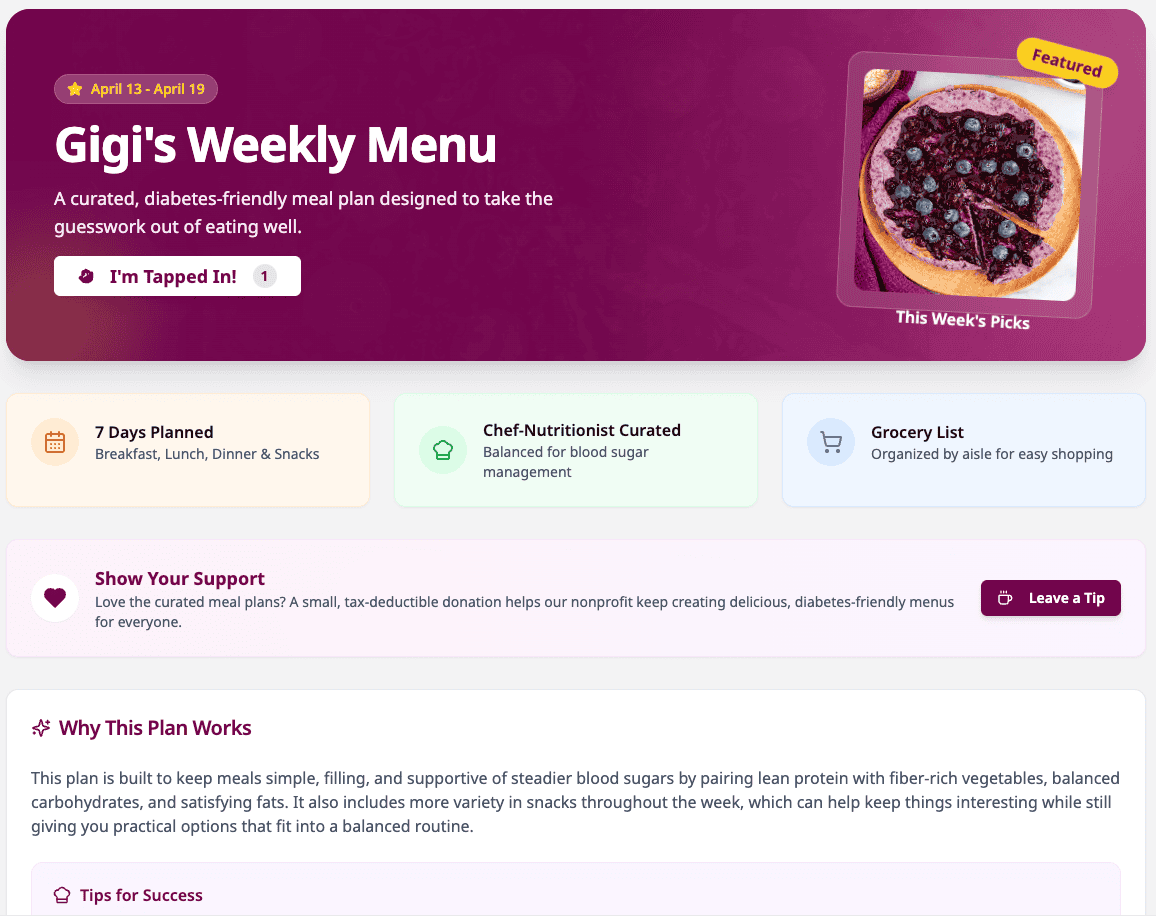
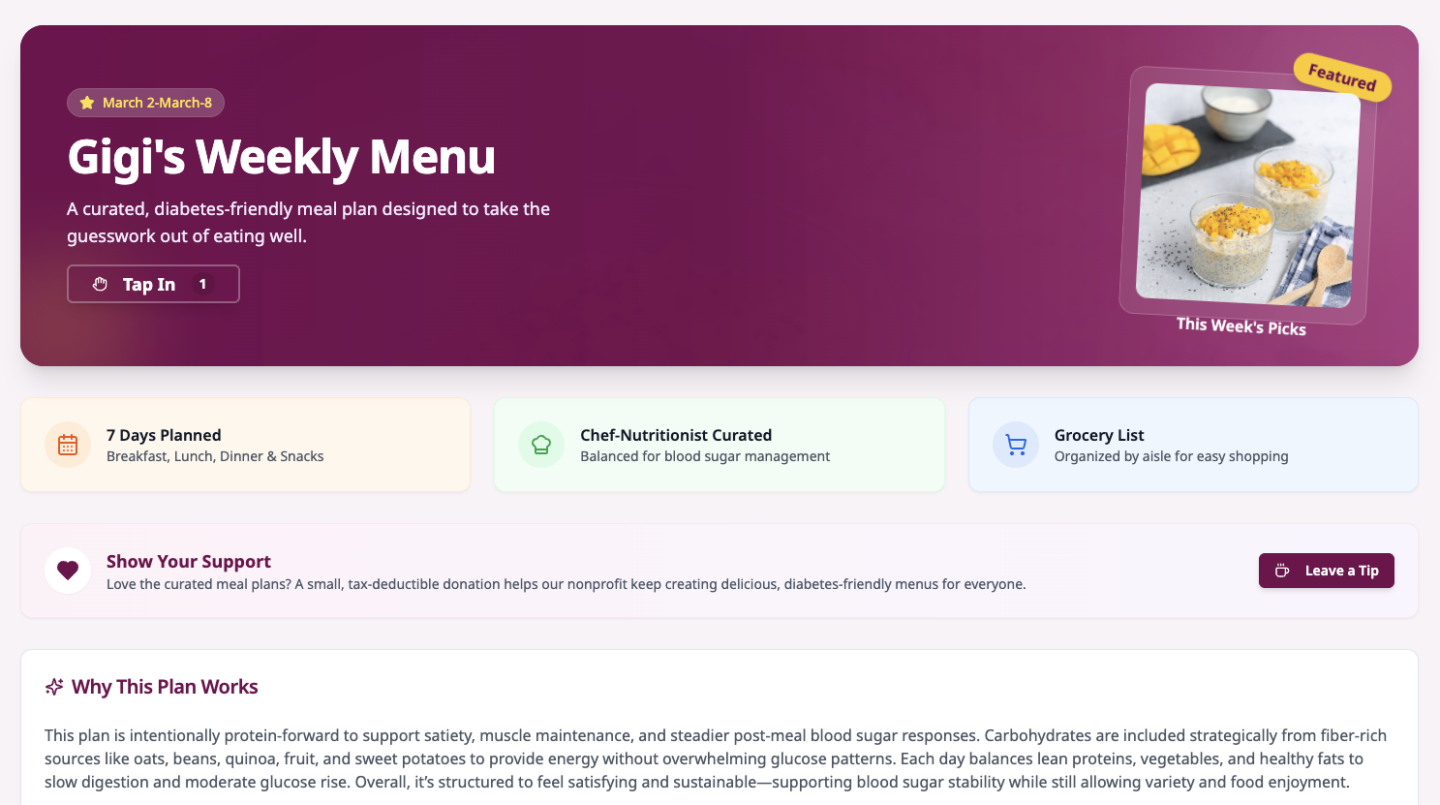
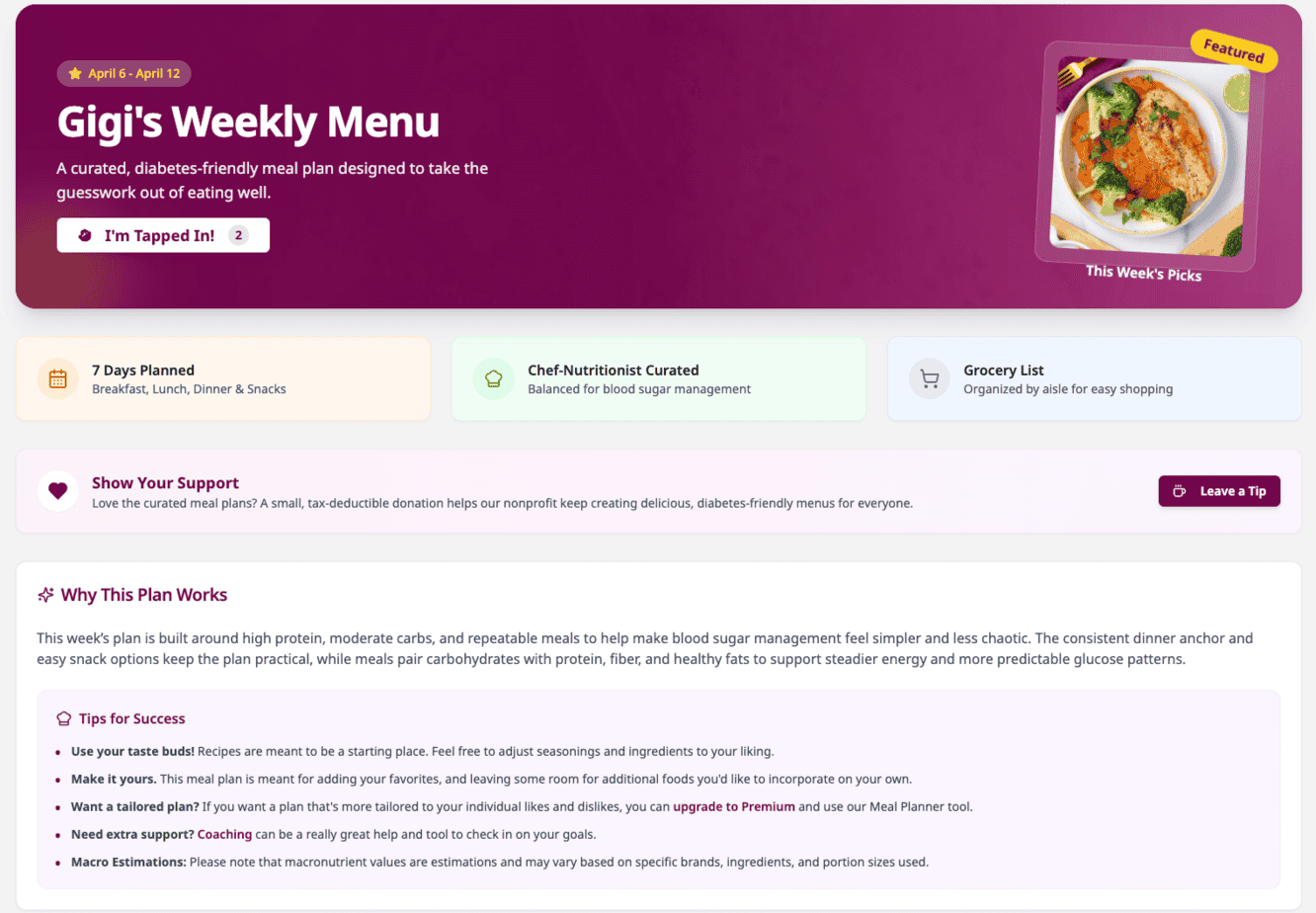
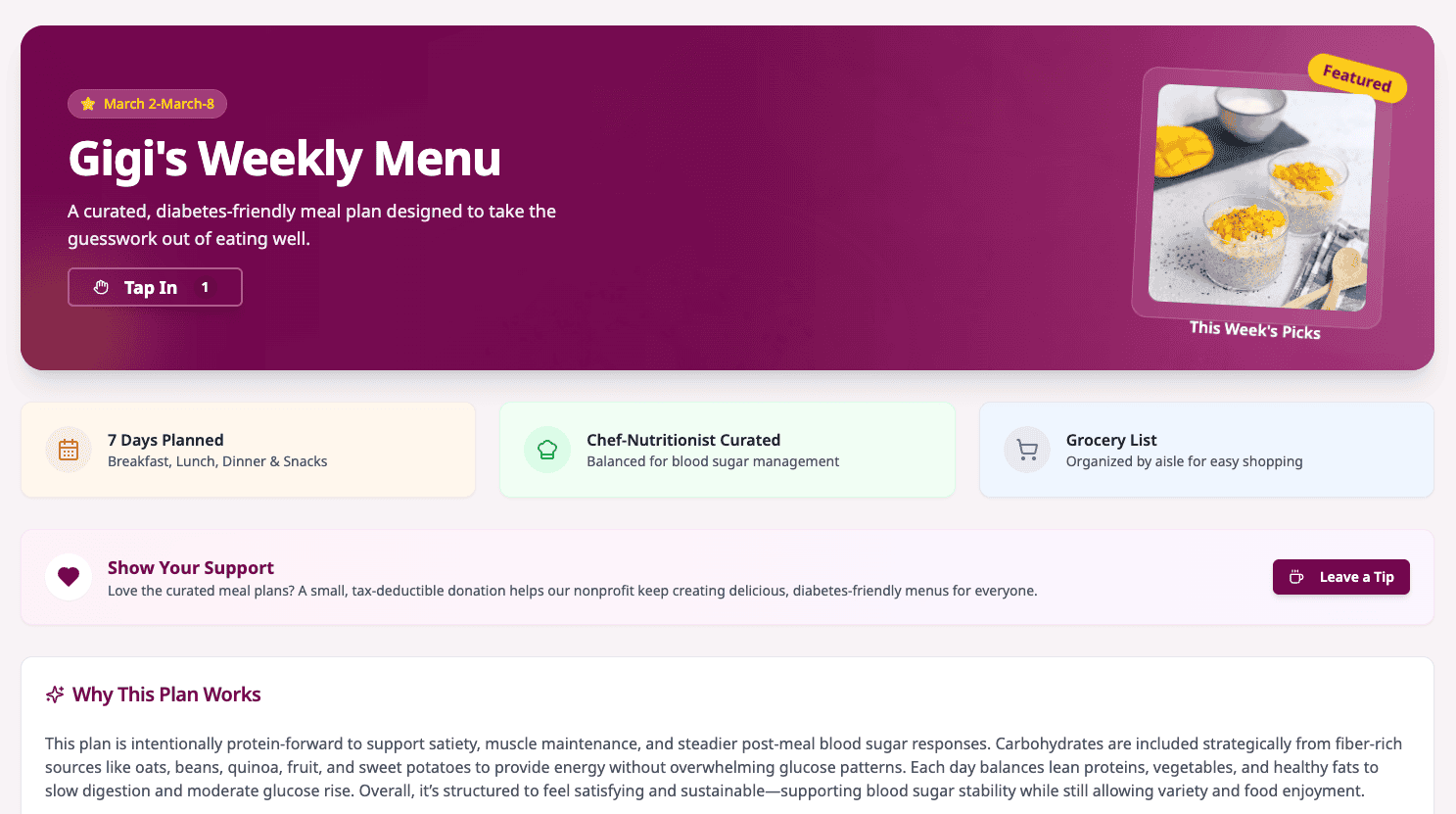
This diabetes meal plan inside Glucose Guide was designed with strategy—not restriction.
What Makes This a Smart Diabetes Meal Plan?
This plan was built around three evidence-informed principles:
- Protein-forward meals to support satiety and muscle maintenance
- Fiber-rich carbohydrates to slow digestion and reduce rapid glucose spikes
- Balanced macronutrient distribution throughout the day
Carbohydrates are not the problem. Unstructured carbohydrate intake often is.
When you eat carbs, they break down into glucose. That glucose enters your bloodstream. Insulin helps move it into cells for energy. With diabetes, that system is impaired—either because insulin isn’t produced adequately, isn’t used efficiently, or both.
But here’s the important part:
You can influence the outcome through food combinations, meal timing, movement, and medication adjustments when needed.
This diabetes meal plan is built around that reality.
Breakfast: Steady Energy Without the Crash
Many blood sugar spikes begin at breakfast—not because carbs are “bad,” but because they’re often eaten alone.
In this plan, breakfast always includes protein and fiber.
Examples from the plan:
- Overnight Oats with Chia and Fresh Raspberries
- Avocado and Egg White Skillet with Salsa
- Scrambled Egg Whites with Smoked Salmon and Whole Wheat Toast
- Veggie Omelette with Low-Fat Cheese and Whole Wheat Toast
Why this works:
- Chia seeds and berries add fiber to slow digestion
- Greek yogurt increases protein to blunt rapid spikes
- Eggs and salmon provide satiety and steady energy
- Whole grains are paired—not eaten solo
The goal isn’t zero carbs. The goal is slower absorption and better predictability.
Lunch: Protein-Forward and Fiber-Supported
Afternoon crashes usually happen when lunch lacks structure. This diabetes meal plan builds lunches around lean protein and moderate, fiber-rich carbs.
Lunches include:
- Mediterranean Chickpea Tuna Bowl
- Grilled Chicken Quinoa Salad
- Turkey and Vegetable Stir Fry with Brown Rice
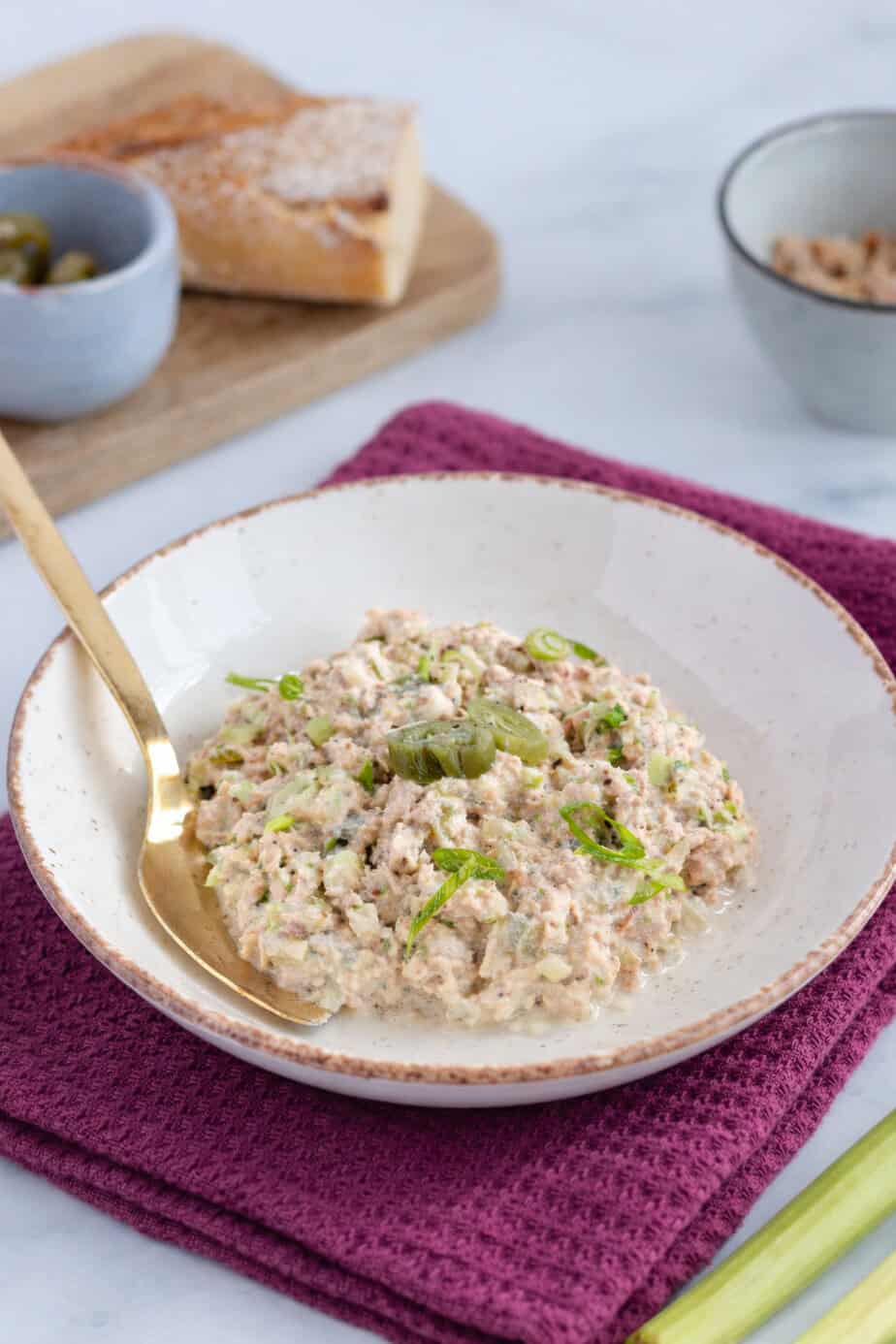
- Tuna and White Bean Salad
Structural strategy:
- Lean protein anchors the meal
- Beans, quinoa, or brown rice provide controlled carbohydrate energy
- Vegetables increase fiber and volume
- Healthy fats improve satiety
When people say they “can’t eat carbs,” they often mean they’re eating carbs without protein or fiber.
Pairing changes the response.
Dinner: Balanced Plates for More Predictable Evenings
Evening blood sugars can be influenced by stress, fatigue, and lower activity levels. This plan keeps dinners satisfying but structured.
Dinner options include:
- Sheet Pan Lemon Herb Chicken with Roasted Brussels Sprouts and Sweet Potato
- Slow Cooker Beef and Vegetable Chili
- Baked Cod with Steamed Broccoli and Quinoa
- Grilled Tuna Steak with Quinoa Pilaf and Spinach
Why these dinners work:
- Protein portions are substantial
- Carbohydrates are moderate—not excessive
- Non-starchy vegetables increase fiber
- Meals are designed for slower digestion
Sweet potatoes, quinoa, beans, and brown rice are included intentionally—not avoided.
It’s not about eliminating starch. It’s about structuring it.
Snacks With Purpose (Not Panic)
Snacks in this diabetes meal plan are intentional. They reinforce balance rather than creating glucose swings.
Snack examples:
- Greek yogurt with flaxseed and cinnamon
- Cottage cheese with fruit and walnuts
- Celery with almond butter
- Yogurt with pumpkin seeds
Each snack includes:
- Protein
- Fiber
- Healthy fats
- Or a combination of all three
That combination prevents the “eat carbs alone, spike, crash, repeat” cycle.
Weekly Macro Structure (Why It Matters)
Across the week, this diabetes meal plan averages:
- High protein intake for satiety and muscle support
- Over 20 grams of fiber daily
- Moderate carbohydrate distribution across meals
Why this matters:
- Large carb loads in one sitting tend to produce higher peaks
- Even distribution supports steadier patterns
- Fiber slows gastric emptying
- Protein improves fullness and glycemic response
This is not a low-carb diet. It’s a structured-carb approach.
A Simple Blood Sugar Tip to Pair With This Plan
If you want to enhance the effectiveness of this diabetes meal plan:
Take a 10–15 minute walk within 30 minutes after eating.
Muscle contraction helps move glucose from the bloodstream into cells. Even light movement can reduce the height and duration of post-meal spikes.
You don’t need intensity. You need consistency.
Who This Diabetes Meal Plan Is Designed For
This structure works well for:
- People with type 1 diabetes adjusting insulin around balanced meals
- People with type 2 diabetes working on insulin sensitivity
- Individuals with LADA navigating both insulin and lifestyle strategies
- Caregivers seeking predictable, balanced meal ideas
When meals are structured consistently:
- Blood sugar patterns become clearer
- Insulin dosing decisions become easier
- Energy levels stabilize
- Food anxiety decreases
And that’s the real goal of a sustainable diabetes meal plan.
The Bottom Line
You can eat oats with diabetes.
You can eat fruit with diabetes.
You can eat sweet potatoes with diabetes.
What matters most is the context of the plate.
This diabetes meal plan focuses on:
- Balanced macronutrients
- Fiber-rich carbohydrates
- Adequate protein
- Real-life practicality
Not restriction. Strategy.
And strategy is what makes blood sugar management sustainable over time.