
This content contains affiliate links, which helps hangrywoman.com to provide free recipes and resources. Thank you for your support of my blog and non-profit organization, Glucose Guide.
Breakfast gets a bad rap in diabetes care. It’s either framed as too carby or boxed into eggs-only territory, neither of which reflects how real people eat or what actually supports blood sugar over the morning.
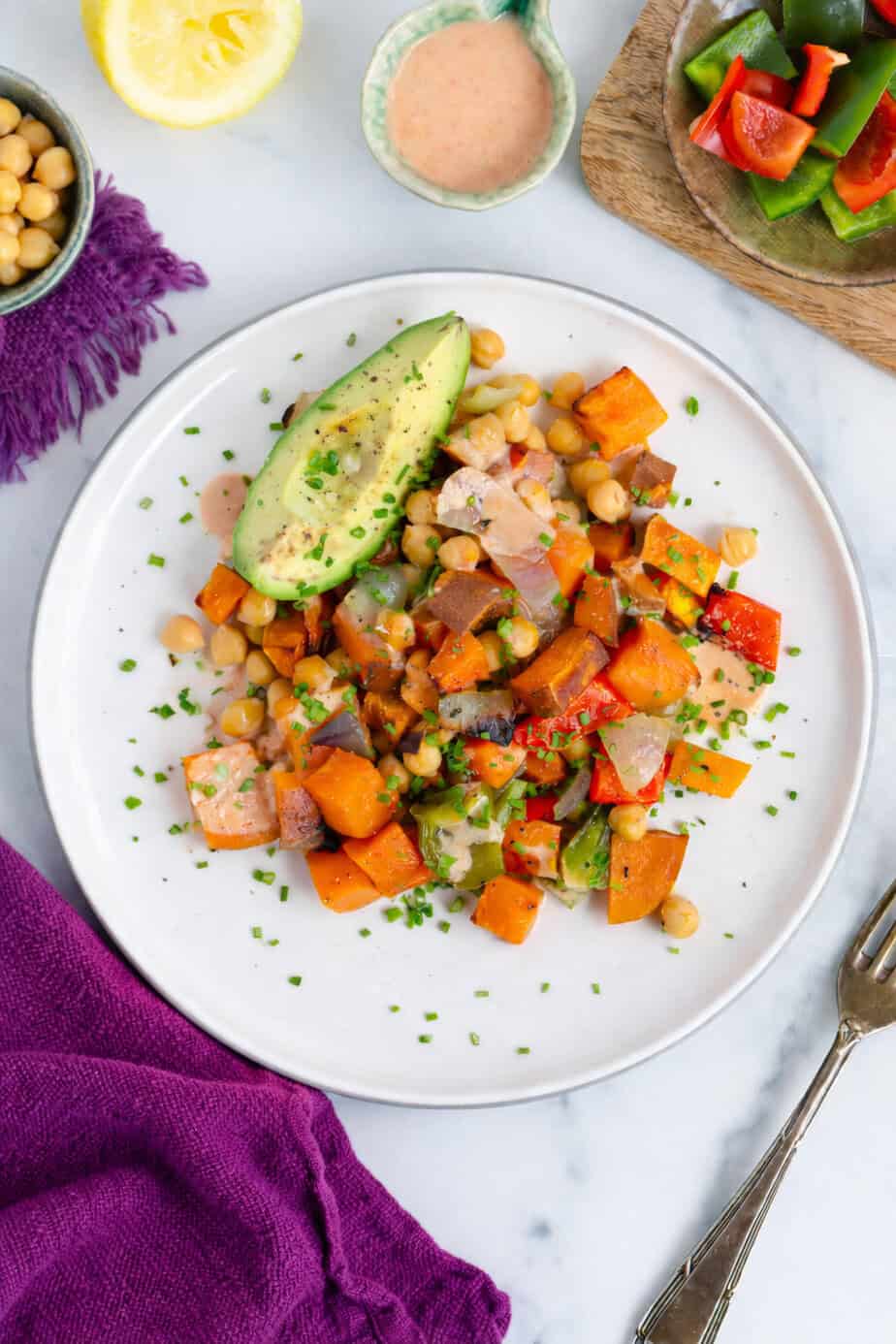
This chickpea sweet potato breakfast hash lives comfortably in reality. It’s warm, savory, filling, and balanced — not because it avoids carbohydrates, but because it uses them intentionally.
From a health coach and nutritionist perspective, this is exactly the kind of meal that supports steady energy, fewer blood sugar surprises, and a calmer start to the day.
Why this works for people with diabetes
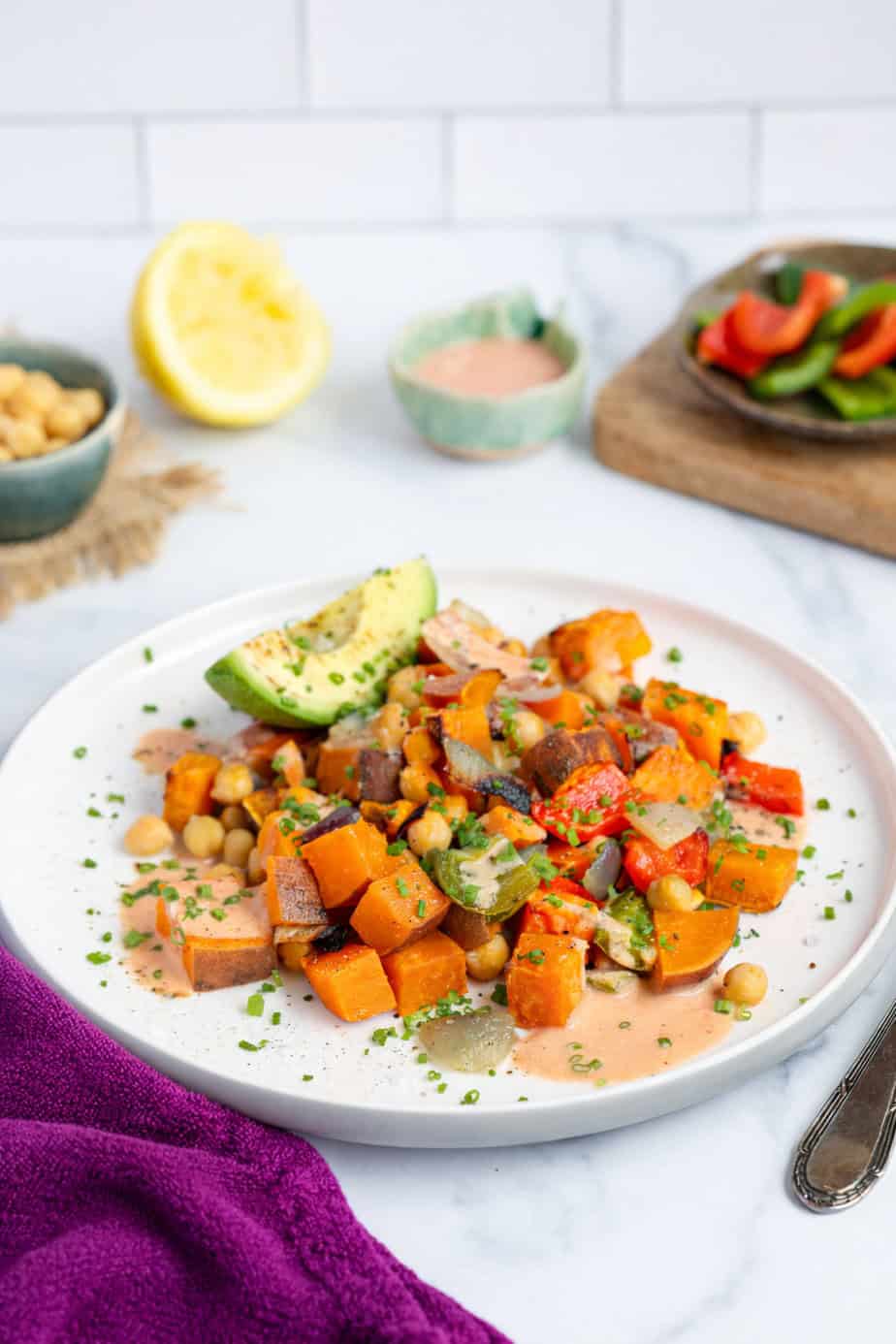
Sweet potatoes and chickpeas both contain carbohydrates, yes — and they also bring fiber, texture, and staying power to the plate.
Fiber slows digestion, which can help reduce sharp glucose spikes. Chickpeas add plant-based protein, while olive oil and tahini contribute fat, which further helps with glucose steadiness and satiety.
This is the kind of breakfast that says: You don’t need to fear food to manage diabetes. You need structure.
It’s also sheet-pan simple, which matters. Sustainable meals beat “perfect” meals every time.
How Each Ingredient Supports Blood Sugar Balance
One of the most helpful shifts I see people make in diabetes care is moving away from asking “Is this food allowed?” and toward “What is this food doing for me?”
This recipe is a great example of how individual ingredients work together to support steadier blood sugars, better energy, and satisfaction.
Sweet potatoes
Sweet potatoes often get mislabeled as “too sugary” for diabetes, but that oversimplifies how they behave in the body.
Sweet potatoes are a source of complex carbohydrates, meaning they digest more slowly than refined carbs.
They also contain fiber, which helps slow glucose absorption, and potassium, which supports muscle and nerve function.
From a coaching perspective, sweet potatoes tend to work better when they’re paired with protein and fat — exactly what’s happening in this dish.
Roasting them also brings out flavor without adding sugar, which matters for long-term sustainability.
Chickpeas
Chickpeas are doing a lot of quiet heavy lifting here.
They provide both carbohydrate and plant-based protein, which helps reduce how quickly blood sugar rises after eating.
They’re also rich in soluble fiber, which supports digestion and can help improve post-meal glucose patterns.
In practice, chickpeas often make meals feel more filling without pushing people into extreme portions.
That matters for diabetes management because consistent intake tends to beat restriction every time.
Bell peppers (red and green)
Bell peppers add volume, crunch, and natural sweetness with very little impact on blood sugar.
They’re low in carbohydrates, high in water content, and rich in vitamin C, which supports immune function and iron absorption.
From a behavior standpoint, colorful vegetables also make meals feel more satisfying and complete, which reduces the urge to keep grazing later.
That’s not willpower — that’s physiology and psychology working together.
Onion
Onions provide flavor depth and a small amount of carbohydrate, but their real value is in how they support the overall structure of the dish.
They contain compounds that may support insulin sensitivity and add bulk and aroma, which increases satisfaction without needing added sugars or sauces.
This is a good example of how “background” ingredients still matter in diabetes-friendly cooking.
Olive oil
Olive oil contributes fat, which slows digestion and helps reduce sharp glucose spikes when paired with carbohydrates.
It also improves mouthfeel and helps roasted vegetables feel more satisfying — something that matters more than most people realize.
From a health coaching lens, fat is often the difference between a meal that “looks fine” and one that actually keeps blood sugar steady for hours.
Tahini
Tahini, made from ground sesame seeds, adds both fat and a small amount of protein.
This combination helps balance the carbohydrate content of the hash and supports satiety.
Tahini also contains minerals like magnesium, which plays a role in glucose metabolism.
Practically speaking, tahini-based sauces tend to be more blood-sugar-friendly than sweet sauces or glazes, while still delivering flavor people enjoy.
Lemon juice
Lemon juice adds acidity, which can slightly slow gastric emptying — meaning carbohydrates enter the bloodstream more gradually.
It also brightens flavor, making the dish feel complete without needing added sugar.
This is one of those small-but-mighty details that supports both taste and blood sugar outcomes.
Hot sauce or sriracha
Used in moderation, hot sauce adds heat and flavor without significantly affecting blood sugar.
Spicy elements can also increase meal satisfaction, which helps people feel done eating when they’re actually done.
The key here is portion awareness, not avoidance.
Avocado (optional topping)
Avocado adds fiber and monounsaturated fat, both of which support steadier glucose responses. It also increases the staying power of the meal, which can be especially helpful for people who notice mid-morning blood sugar dips or hunger.
From a coaching standpoint, avocado is often a helpful add-on when someone needs more balance, not fewer carbs.
The bigger picture
No single ingredient “controls” blood sugar. What matters is how foods are combined, portioned, and repeated over time.
This recipe works because it respects that reality. It doesn’t remove carbohydrates — it supports them with fiber, fat, and protein.
That’s how diabetes-friendly eating becomes realistic, not restrictive.
Chickpea Sweet Potato Breakfast Hash Recipe
Serves: 4
Total time: ~50 minutes
Method: Oven / sheet pan
Diet: Plant-based, dairy-free, gluten-free
Ingredients
For the hash
- 1½ lbs (680 g) sweet potatoes, cubed
- ½ large onion, chopped
- 1 red bell pepper, diced
- 1 green bell pepper, diced
- 1 (14-oz / 400-g) can chickpeas, drained and rinsed
- 2 tablespoons olive oil
- Salt and black pepper, to taste
For the sriracha tahini sauce
- 4 tablespoons tahini
- Juice of ½ small lemon (about ½–1 tablespoon)
- 4 tablespoons water (add gradually)
- Louisiana-style hot sauce or sriracha, to taste
- Salt, to taste
Optional toppings
- Sliced avocado
- Chopped chives or green onions
Instructions
- Preheat your oven to 425°F (220°C) and line a sheet pan with parchment paper.
- Place the sweet potatoes, onion, bell peppers, and chickpeas in the center of the pan.
- Drizzle with olive oil, season with salt and pepper, and toss until everything is well coated.
- Spread into an even layer and roast on the center rack for 20 minutes, stirring halfway through.
- Increase the oven temperature to 500°F (260°C). Stir again and return to the oven for another 20 minutes, stirring halfway, until the vegetables are browned and tender.
- While the hash roasts, whisk together tahini, lemon juice, water, hot sauce, and salt until smooth. Adjust thickness and heat to your liking.
- Let the hash cool slightly, then drizzle with the sriracha tahini sauce. Add avocado or chives if using.
Blood sugar notes (the part most recipes skip)
From a coaching standpoint, this meal works best when you honor the portion and the pairing.
If you’re someone who notices higher post-meal blood sugars in the morning, consider:
- Adding extra chickpeas or a side of tofu or eggs for more protein
- Keeping avocado on the plate for additional fat
- Watching how sauces are portioned — flavor matters, but consistency matters more
There’s no single “right” version. Your glucose data tells the story, not a rulebook.
Make it work for your real life
This hash reheats well, making it a strong option for meal prep. It can also pull double duty as:
- A lunch bowl with greens
- A savory dinner side
- A breakfast-for-dinner situation (highly recommended)
Food that adapts to your life is easier to manage than food you have to tiptoe around.
Want help building meals like this consistently?
Inside Glucose Guide, members can log meals, explore balanced recipes, and get coaching-informed guidance without judgment. It’s not about perfection — it’s about patterns you can live with.
👉 Start tracking and learning at https://heygigi.app
Print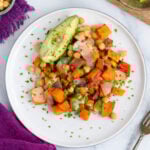
Chickpea Sweet Potato Breakfast Hash (Diabetes-Friendly, Plant-Forward, and Actually Filling)
- Total Time: 60 minutes
- Yield: 6 servings 1x
- Diet: Diabetes-Friendly, Diabetic
Description
This chickpea sweet potato breakfast hash lives comfortably in reality. It’s warm, savory, filling, and balanced — not because it avoids carbohydrates, but because it uses them intentionally. From a health coach and nutritionist perspective, this is exactly the kind of meal that supports steady energy, fewer blood sugar surprises, and a calmer start to the day.
Ingredients
For the hash
- 1 1/2 lbs (680 g) sweet potatoes, cubed
- 1/2 large onion, chopped
- 1 red bell pepper, diced
- 1 green bell pepper, diced
- 1 (14-oz / 400-g) can chickpeas, drained and rinsed
- 2 tablespoons olive oil
- Salt and black pepper, to taste
For the hot tahini sauce
- 4 tablespoons tahini
- Juice of 1/2 small lemon (about 1/2–1 tablespoon)
- 4 tablespoons water (add gradually)
- Louisiana-style hot sauce or sriracha, to taste
- Salt, to taste
Optional toppings
- Sliced avocado
- Chopped chives or green onions
 Get Recipe Ingredients
Instructions
- Preheat your oven to 425°F (220°C) and line a sheet pan with parchment paper.
- Place the sweet potatoes, onion, bell peppers, and chickpeas in the center of the pan.
- Drizzle with olive oil, season with salt and pepper, and toss until everything is well coated.
- Spread into an even layer and roast on the center rack for 20 minutes, stirring halfway through.
- Increase the oven temperature to 500°F (260°C). Stir again and return to the oven for another 20 minutes, stirring halfway, until the vegetables are browned and tender.
- While the hash roasts, whisk together tahini, lemon juice, water, hot sauce, and salt until smooth. Adjust thickness and heat to your liking.
- Let the hash cool slightly, then drizzle with the sriracha tahini sauce. Add avocado or chives if using.

Equipment
 Buy Now →
 Notes
- From a coaching standpoint, this meal works best when you honor the portion and the pairing.
- If you’re someone who notices higher post-meal blood sugars in the morning, consider:
- Adding extra chickpeas or a side of tofu or eggs for more protein
- Keeping avocado on the plate for additional fat
- Watching how sauces are portioned — flavor matters, but consistency matters more
- There’s no single “right” version. Your glucose data tells the story, not a rulebook.
- Prep Time: 10 minutes
- Cook Time: 50 minutes
- Category: Appetizer, Dinner, Lunch
- Method: Baking
- Cuisine: American
Nutrition
- Serving Size: ~220 g per serving
- Calories: 285
- Sugar: 7.5 g
- Sodium: 1073.1 mg
- Fat: 11.7 g
- Saturated Fat: 1.6 g
- Carbohydrates: 40.4 g
- Fiber: 8.4 g
- Protein: 7.9 g
- Cholesterol: 0 mg