This content contains affiliate links, which helps hangrywoman.com to provide free recipes and resources. Thank you for your support of my blog and non-profit organization, Glucose Guide.
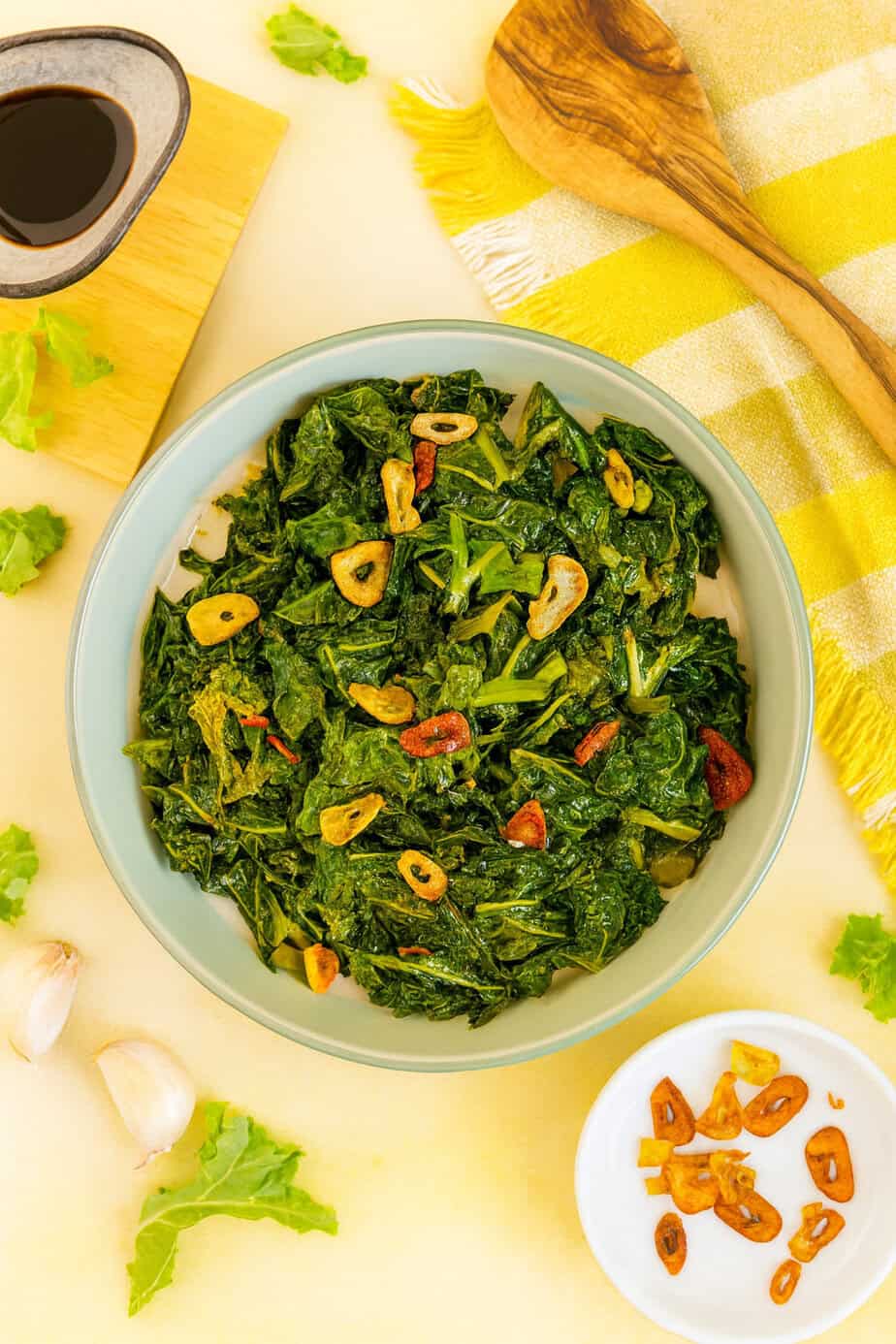
This dish works beautifully as a side, a base for bowls, or folded into eggs, grains, or pasta. Simple food. Real flavor. No kale trauma required.
Why This Works (Especially for Blood Sugar Balance)
Kale is low in carbohydrates, high in fiber, and rich in micronutrients like vitamin K and folate. Cooking it gently helps break down its tough fibers, making it easier to digest and—let’s be honest—much more enjoyable to eat.
Adding fat (olive oil) slows digestion and enhances flavor, while the vinegar at the end brightens everything up and keeps the dish from tasting flat.
Garlic-Sautéed Kale Recipe
Prep Time: 5 minutes
Cook Time: 10 minutes
Total Time: 15 minutes
Serves: 4
Dietary Notes:
Gluten-free • Dairy-free • Low-carb • Meal prep–friendly
Ingredients
- 4 tablespoons olive oil
- 3 cloves garlic, thinly sliced
- 1 large bunch kale, stems removed and leaves coarsely chopped (Roughly 4-5 cups)
- ½ cup (120 ml) vegetable stock
- 2 tablespoons (30 ml) red wine vinegar
- Salt and black pepper, to taste
Instructions
Heat the olive oil in a large pan over medium-high heat. Add the sliced garlic and cook for about 1 minute, just until soft and fragrant. You’re looking for golden and aromatic, not crispy or bitter.
Add the chopped kale to the pan and turn the heat up to high. Pour in the vegetable stock and toss everything together so the kale is lightly coated. Cover the pan and cook for 5–7 minutes, until the kale is wilted but still a vibrant green.
Remove the lid and continue cooking for another 1–2 minutes, stirring occasionally, until most of the liquid has evaporated and the kale is tender.
Season generously with salt and black pepper. Add the red wine vinegar, toss well, and serve warm.
Make It Yours
- Add a pinch of red pepper flakes for heat
- Finish with lemon zest instead of vinegar for a brighter flavor
- Toss with white beans or chickpeas for a heartier side
- Serve under grilled fish, chicken, or tofu to soak up the garlicky oil

Garlic-Sautéed Kale
- Total Time: 15 minutes
- Yield: 4 servings 1x
- Diet: Low Calorie
Description
A simple, garlicky kale recipe that’s tender, flavorful, and easy to love. Ready in 15 minutes and perfect for balanced meals.
Ingredients
- 4 tablespoons olive oil
- 3 cloves garlic, thinly sliced
- 1 large bunch kale, stems removed and leaves coarsely chopped (about 4 heaping cups)
- 1/2 cup (120 ml) vegetable stock
- 2 tablespoons (30 ml) red wine vinegar
- Salt and black pepper, to taste
 Get Recipe Ingredients
Instructions
- Heat the olive oil in a large pan over medium-high heat. Add the sliced garlic and cook for about 1 minute, just until soft and fragrant. You’re looking for golden and aromatic, not crispy or bitter.
- Add the chopped kale to the pan and turn the heat up to high. Pour in the vegetable stock and toss everything together so the kale is lightly coated. Cover the pan and cook for 5–7 minutes, until the kale is wilted but still a vibrant green.
- Remove the lid and continue cooking for another 1–2 minutes, stirring occasionally, until most of the liquid has evaporated and the kale is tender.
- Season generously with salt and black pepper. Add the red wine vinegar, toss well, and serve warm.


Notes
- Add a pinch of red pepper flakes for heat
- Finish with lemon zest instead of vinegar for a brighter flavor
- Toss with white beans or chickpeas for a heartier side
- Serve under grilled fish, chicken, or tofu to soak up the garlicky oil
- Prep Time: 5 minutes
- Cook Time: 10 minutes
- Category: Side Dishes
- Method: Sautee
- Cuisine: American
Nutrition
- Serving Size: 1/4 Yield
- Calories: 134
- Sugar: 0.6 g
- Sodium: 665.8 mg
- Fat: 14.2 g
- Saturated Fat: 2 g
- Carbohydrates: 2.5 g
- Fiber: 0.6 g
- Protein: 0.8 g
- Cholesterol: 0 mg
Is Kale Good for Blood Sugar Control?
Yes—kale supports blood sugar balance, but it doesn’t lower glucose on its own.
Kale is a nonstarchy vegetable that’s low in carbohydrates and high in fiber.
Fiber slows digestion and helps reduce blood sugar spikes when kale is eaten with meals that contain carbs. It also adds volume to meals, which can help with fullness and more consistent eating patterns—both important for diabetes management.
Kale also contains antioxidants and plant compounds that support overall metabolic health. It’s not a treatment, but it’s a supportive food that fits well into blood sugar–friendly meals.
Are Kale Supplements Good for Diabetes?
Kale supplements are not more effective than eating whole kale.
Powders, capsules, and greens supplements are often marketed for blood sugar control, but there’s no strong evidence they work better than eating the vegetable itself.
Most supplements remove fiber—the part of kale that helps slow digestion and support steadier blood sugars.
Whole kale provides fiber, water, and a mix of nutrients that work together. Your body processes real food more effectively than isolated nutrients.
Is Kale Better Cooked or Raw?
Neither is better—both have benefits.
Raw kale contains more vitamin C but can be tough to digest for some people. Cooked kale is softer, easier on digestion, and allows certain nutrients like beta-carotene to become more absorbable.
If raw kale causes bloating or discomfort, cooking it is often the better choice—and still very nutritious.
Does Kale Lose Nutrients When Cooked?
Some nutrients decrease slightly, while others become easier to absorb.
Cooking kale reduces vitamin C a bit but improves absorption of fat-soluble vitamins like A, E, and K. Minerals also become easier to digest. Gentle cooking methods like sautéing or steaming preserve the most nutrients.
Adding a little bit of healthy fats to kale like avocado oil, or olive oil can help improve the nutrient absorption.
Cooked kale is still a highly nutritious option.
Can You Eat Too Much Kale?
Yes—but this usually only happens with very large amounts of raw kale eaten daily.
Excessive raw kale consumption (especially through juicing) may interfere with thyroid function and cause digestive discomfort. Kale is also high in vitamin K, which matters for people taking blood thinners.
Normal servings—especially cooked—are safe and beneficial for most people.
How Often Can You Eat Kale?
Kale can be enjoyed regularly—even daily—as part of a balanced diet.
Eating kale often can support fiber intake, digestion, and meal balance. For best results, rotate kale with other leafy greens and include enough overall energy and carbohydrates in your meals.
Consistency and variety matter more than eating any one food perfectly.
Bottom Line: Kale and Blood Sugar
Kale supports blood sugar balance by slowing digestion and adding fiber—not by acting like medication. Supplements aren’t more effective than food. Cooked kale is just as valid as raw. And you can enjoy kale often without worry when it’s part of a balanced plate.
Want help figuring out how sides like this fit into your actual meals and blood sugar patterns?
Track meals, spot patterns, and build balanced plates inside the Diabetes Food Journal in Glucose Guide.
👉 https://heygigi.app